

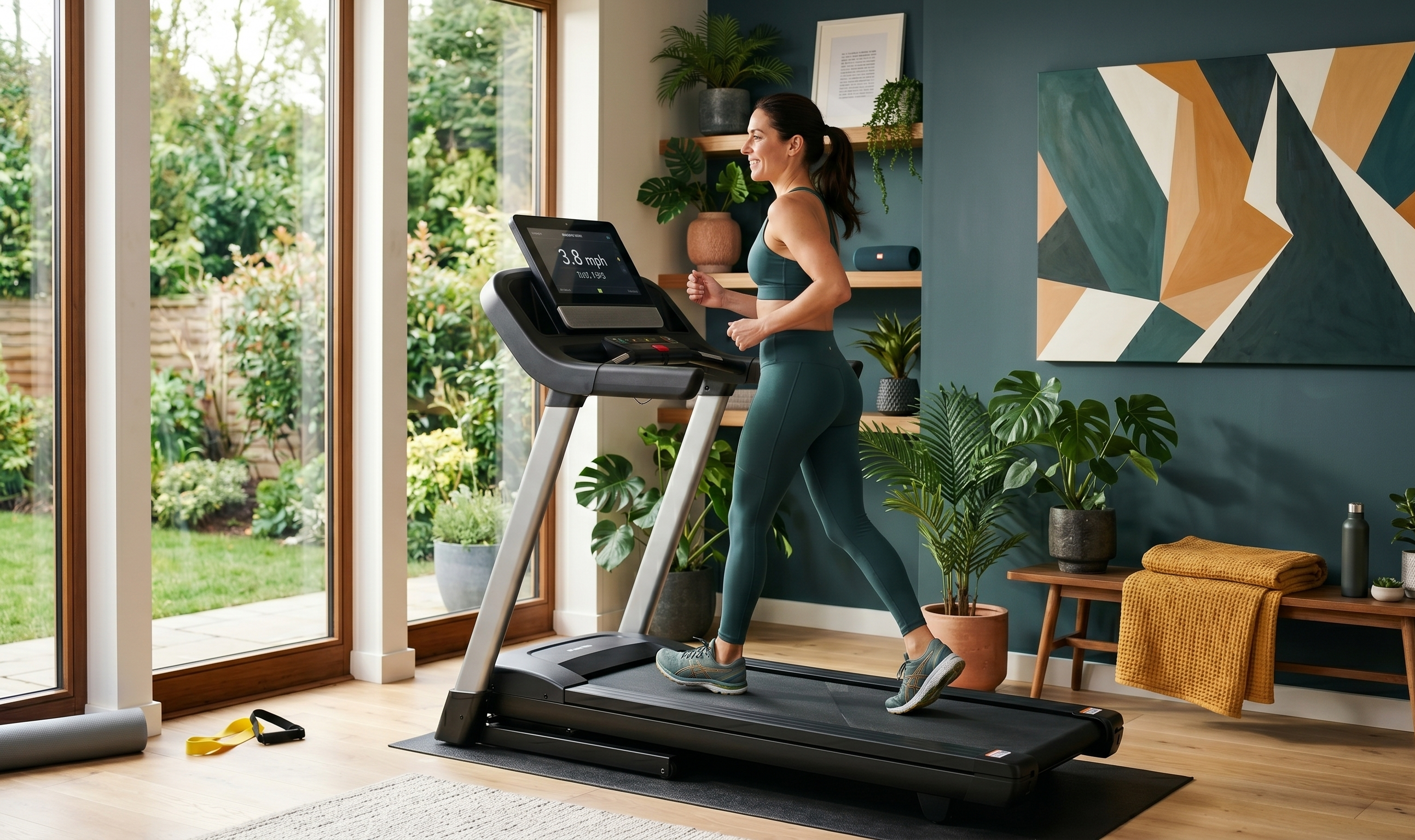
Buying a treadmill is one of the most significant investments you can make in your home gym, and one of the easiest to get wrong. After more than 30 years in the fitness equipment industry, I've seen it happen hundreds of times: someone buys a machine based on price alone, only to end up with a treadmill that's too underpowered for their stride, too cramped for their height, or so loud they're afraid to use it before 8 a.m. The good news is that a little knowledge goes a long way. Whether you're a daily runner training for your next half marathon or someone who just wants a reliable treadmill for walks, this guide will walk you through exactly what to look for and what to avoid.
Know Your Goals Before You Buy
This sounds obvious, but it's honestly the most important step, and most people skip it. A walker and jogger have very different needs in a treadmill than an individual doing 30+ miles. Think about how often you plan to use the treadmill, what kind of workouts you'll do (walking, jogging, running, interval training), whether anyone else in the household will use it, and how much space you're working with.
Your honest answers to those questions will shape every other decision in this guide. A household with one casual walker doesn't need a commercial-grade motor. A serious runner who trains daily absolutely does. Getting clear on your goals before you start comparing specs will save you from overspending on features you don't need and an understanding of what grade of treadmill you will need.
Motor Power - The Heart of the Machine
The motor is where treadmill quality is often won or lost, and it's the most common place where budget machines cut corners. Motor power is measured in continuous-duty horsepower (CHP), and this is the number you want to pay attention to. Not "peak horsepower," which is a marketing figure that overstates real-world performance.
For walkers, a motor rated at 2.0 CHP is generally adequate. Joggers and recreational runners should look for 3.0 CHP or higher. If you run regularly at higher speeds or you're a heavier user, you want 3.5 CHP or more. Going commercial? Machines like the Spirit Fitness CT800 Treadmill feature robust motors built for continuous high-demand use, which is why they're trusted in professional gym settings. A stronger motor doesn't just mean faster speeds, it means smoother, quieter operation and dramatically longer machine life.

Running Surface Size
Belt dimensions have a bigger impact on your comfort than most buyers realize, and this is especially true for taller runners. Standard residential treadmills often come with a belt that's 20 inches wide and 55 to 58 inches long. That works fine for most walkers and shorter runners, but if you're taller than 5'10" or you have a longer natural stride, you'll want at least a 60-inch belt length.
Width matters too. A 22-inch-wide belt gives you noticeably more room to move naturally without constantly correcting your lateral position, something you won't appreciate until you've had a cramped run on a 20-inch belt and then tried a wider one. The Spirit Fitness XT685 Treadmill and the True Fitness ES900 Treadmill both offer generous running surfaces that accommodate a wide range of users comfortably.
Cushioning and Deck Technology
Joint impact is a real concern, especially for anyone running multiple days a week or dealing with knee or hip issues. The quality of a treadmill's cushioning system can make or break the long-term health of your joints and it's something you truly can't assess from a spec sheet alone.
Higher-quality treadmills from brands like Life Fitness, True Fitness, and Spirit Fitness invest heavily in their deck cushioning systems. Life Fitness, for example, uses their FlexDeck® Shock Absorption System across their lineup, which has been shown to reduce impact significantly compared to running on pavement. The Life Fitness T3 Treadmill and the Life Fitness Club Series+ Treadmill both feature this technology and represent two very different price points. Proof that you don't necessarily have to go top-of-the-line to get good joint protection.
True Fitness similarly builds orthopedic belt cushioning into their residential and commercial lines. If joint health is a priority for you, this is an area where spending a little more genuinely pays off over time.
Speed, Incline, and Decline Range
Most people focus heavily on top speed, but for the majority of users this matters less than they think. If you're not a competitive runner, a maximum speed of 10–12 mph is more than sufficient. What's often more important is the low end of the speed range. Look for a treadmill that goes as slow as 0.5 mph if you plan on doing rehabilitation-style walking or recovery workouts.
Incline range is where things get more interesting. An incline range of 0–15% is standard on quality machines, and it's one of the most effective ways to increase workout intensity without increasing speed. If you want to simulate outdoor terrain, especially hills, make sure your machine hits at least 12–15% incline.
Decline is a newer feature that's becoming more common on premium models, and it's worth considering if you want true trail simulation. A 3% decline may not sound like much, but it activates different muscle groups and makes for a more complete workout overall. The True Fitness Z500 Treadmill is a great example of a compact residential machine that delivers a strong speed and incline range without taking up excessive floor space.
Console Features and Connectivity
The console is where budget and premium treadmills diverge the most visually, and it can be tempting to prioritize a flashy screen over more fundamental specs. That said, a good console genuinely enhances your experience, especially for long-term adherence to a workout routine.
At a minimum, look for clear readouts of speed, incline, time, distance, and heart rate. Most quality treadmills today also offer Bluetooth connectivity, compatibility with popular fitness apps like Apple Health, Google Fit, or brand-specific platforms, and built-in workout programs. The Life Fitness F3 Folding Treadmill is a solid mid-range option that balances smart connectivity with practical home gym value. The Life Fitness Aspire Treadmill offers a clean, intuitive interface for users who prefer simplicity over bells and whistles.
One thing I always tell customers: don't let the console be the deciding factor. A treadmill with a mediocre motor and a gorgeous touchscreen is still a mediocre treadmill.
Folding vs. Non-Folding Treadmills
Space is a genuine concern for most home gym setups, and a folding treadmill is an appealing solution. There is a trade off. Folding treadmills typically have slightly shorter decks and may not be as structurally rigid as their non-folding counterparts, particularly at the lower end of the price range.
For walkers and light joggers with limited space, a quality folding model like the Spirit Fitness XT385 Folding Treadmill is an excellent choice. It offers a smart space-saving design without sacrificing the performance features most users actually need. If you're a heavier runner or plan to log serious mileage, a non-folding model will generally serve you better over the long term.
Home Use vs. Commercial Grade
This distinction trips people up more than almost anything else. "Commercial" doesn't automatically mean better for home use, it means built for heavy multi-user environments like health clubs and hotels, where a machine might see 6–10 hours of use per day from dozens of different users.
For most home users, a high-quality residential treadmill is exactly right. For people who train intensely, run daily, or have multiple household members using the machine, stepping up to a light commercial model is a worthwhile investment. The Spirit Fitness CT800 Treadmill sits in that commercial category and is a machine I'd recommend without hesitation to serious athletes who want gym-quality performance at home.
Our Top Treadmill Picks by Category
After decades of evaluating fitness equipment, here are the models I'd point customers toward right now:
- Best for everyday walkers and light joggers: Life Fitness Aspire Treadmill — reliable, smooth, and built by one of the most trusted names in the industry.
- Best space-saving option: Life Fitness F3 Folding Treadmill or Spirit Fitness XT385 Folding Treadmill — both fold well without compromising performance for typical home use.
- Best mid-range runner's treadmill: True Fitness Z500 Treadmill or Spirit Fitness XT685 Treadmill — serious performance without full commercial pricing.
- Best premium residential option: True Fitness ES900 Treadmill or Life Fitness Club Series+ Treadmill — for dedicated runners who want a machine that will last a decade or more.
- Best for heavy use or commercial settings: Spirit Fitness CT800 Treadmill — built for demand, priced accordingly, worth every dollar.
The right treadmill is the one that matches how you actually plan to use it, not the one with the most impressive spec sheet or the lowest price tag. If you're still not sure which direction to go, the team at The Fitness Outlet has been helping people make this decision for over 30 years. We'd be happy to talk through your options. Browse our full treadmill collection to see everything we carry.


Share:
Thorne Supplements: Complete Guide to What We Carry and Why
Best Exercise Equipment for Seniors: Low Impact, High Results