


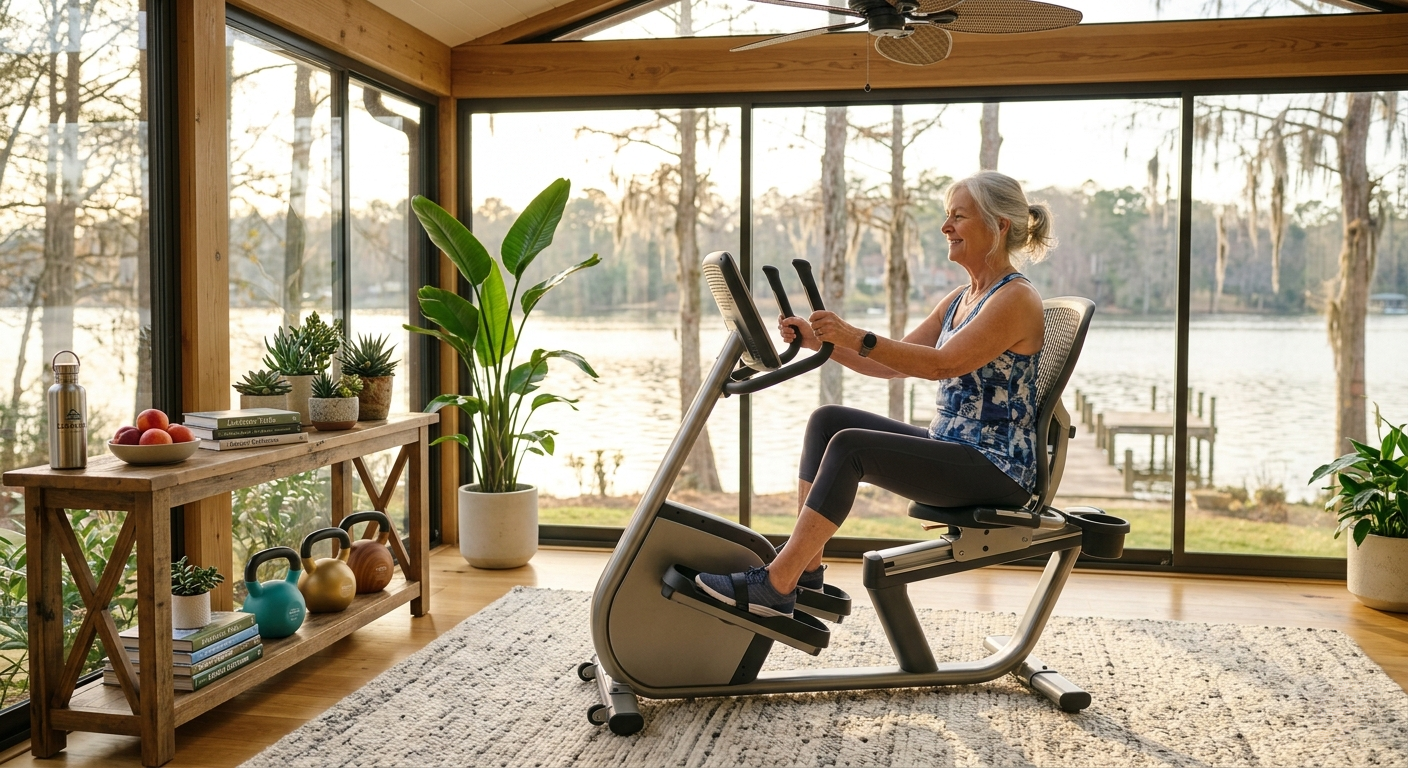
After more than three decades spent on showroom floors, in physical therapy clinics, and in conversations with customers who just want to move better without hurting more, I can tell you one thing with total confidence: the right piece of exercise equipment for seniors isn't the one with the most bells and whistles. It's the one that gets used, day after day, without leaving you sore, frustrated, or afraid of falling. That's the whole philosophy behind this guide, and it's the same philosophy we apply every time we help a customer choose equipment at The Fitness Outlet.
Aging changes the way your body responds to exercise, but it doesn't have to shrink your world. Joints get cranky, balance isn't what it used to be, and recovery from a workout takes longer than it did at 35. None of that means you should stop moving, in fact, the research is overwhelmingly clear that consistent, low-impact cardiovascular exercise is one of the single best things an older adult can do. It will help with heart health, bone density, blood sugar control, mood, and independence. The key is matching the equipment to the body, not the other way around.
Why Low Impact Matters So Much for Older Adults
"Low impact" gets thrown around a lot in marketing, but for seniors it's not a buzzword, it's a biomechanical necessity. High-impact activities like running or jumping create repeated jarring forces through the hips, knees, and lower back. For someone with healthy cartilage and strong stabilizing muscles, that's manageable. For someone managing osteoarthritis, a previous joint replacement, osteoporosis, or simply decades of wear and tear, those same forces can turn a workout into a setback.
Low-impact equipment keeps at least one foot (or both) in contact with a pedal, platform, or pad at all times, which eliminates the jarring landing phase entirely. You still get your heart rate up, you still burn calories, you still build muscular endurance , you just do it without pounding your joints into submission. This is exactly why physical therapists and rehab clinics have relied on recumbent bikes and seated ellipticals for decades. It's also why we see so many of these same commercial-grade machines, the ones built originally for hospitals and rehab centers, finding their way into home gyms for individuals who want club-quality durability without club-quality joint stress.
There's a secondary benefit that doesn't get talked about enough: confidence. A lot of seniors who've had a fall, a hip replacement, or a balance scare become hesitant to exercise at all, which only accelerates the muscle loss and balance decline that caused the problem in the first place. Equipment that supports the body with a wide, stable seat, back support, low step-over height, removes the fear factor. When you're not worried about hurting yourself, you can actually focus on the workout.
Recumbent Bikes: The Gold Standard for Joint-Friendly Cardio
If I had to recommend just one category of equipment for the majority of older adults, it would be the recumbent bike. The reclined seating position distributes your body weight across a wide, supportive seat and backrest rather than concentrating it on a narrow saddle, which takes pressure off the lower back and tailbone immediately. Because the pedals sit out in front of you rather than underneath, there's no awkward mounting or dismounting, no risk of losing balance while swinging a leg over a top tube, and no perching on a narrow seat while you find your footing.
We carry a wide range of recumbent bikes that span from home-friendly to full commercial grade, and the differences matter depending on how a person plans to use the bike. The Spirit Fitness XBR55 Recumbent Bike is one we point a lot of customers toward because it strikes a nice balance: a commercial-grade steel frame, a 24-pound flywheel for smooth pedaling, and 20 levels of magnetic resistance that let a beginner start light and progress over time. For someone who's recovering from surgery or working with a physical therapist, the Spirit Fitness Rehab 4.0R Recumbent Bike is for that exact situation, with cordless operation and 40 resistance levels fine-tuned enough for clinical rehab progressions.
For customers who want the same machines you'd find in a high-end fitness club, the Life Fitness RS1 Recumbent Bike and Life Fitness RS3 Recumbent Bike are both excellent choices. The RS3 in particular has a reclining, ventilated mesh seat with breathable back support and thirteen seat adjustments, which means it can be dialed in precisely for a smaller or taller frame. Something that matters a great deal when comfort is the difference between exercising regularly and not exercising at all. If budget allows and someone wants the full club experience at home, the Life Fitness Platinum Club Series Recumbent Lifecycle brings an integrated touchscreen and internet connectivity into the mix, which can be a nice motivator for people who like tracking progress or streaming entertainment during a workout.
True Fitness also makes some of the most comfortable recumbent bikes we sell. The True Fitness Launch Recumbent Bike is a great entry point with intuitive programming that doesn't overwhelm someone who isn't tech-savvy, while the True Fitness Performance Series Recumbent Bike offers a more customizable, ergonomically refined ride for someone who wants to make this their primary cardio machine for years to come.

Seated Ellipticals: Full-Body Movement Without the Strain
Recumbent bikes are wonderful, but they primarily work the lower body in a fairly fixed pattern. Seated ellipticals close that gap by combining the joint-friendly, seated posture of a recumbent bike with the natural, fluid leg motion of a standing elliptical — and in many cases, moving handlebars that bring the arms and upper body into the workout too.
The Octane Fitness XR6 Seated Elliptical Trainer is one of the standout machines in this category. Its cushioned seat sits at a 45-degree angle that opens up the hips and torso, reducing stress on the lower back while still letting the legs move through a long, natural elliptical path. Octane's own data shows users on this style of machine activate significantly more glute muscle and burn more calories than they would pedaling a standard recumbent bike at a similar intensity — which makes it a great option for someone who has mastered the recumbent bike and is ready for a bit more challenge without adding impact.
The True Fitness Apex Recumbent Elliptical takes a similar concept and runs with it, delivering the full-body benefits of an elliptical stride in a seated design that removes the balance demands of a standing machine entirely. For older adults who miss the feel of a "real" elliptical workout from their younger years but can no longer comfortably stand for twenty or thirty minutes, this is often the machine that brings that feeling back without the knee complaints.
Treadmills and Other Low-Impact Cardio Worth Considering
Not every senior needs to give up walking, and a quality treadmill with a cushioned deck and a strong, stable handrail system can be a fantastic low-impact option, particularly for someone working on gait, balance, or simply maintaining the ability to walk comfortably outdoors. Landice has built its reputation over more than forty years on treadmills that are gentle on the joints without sacrificing stability, and a few of their models are specifically designed with rehabilitation in mind.
The Landice L7 RTM Rehabilitation Treadmill and the Landice L8 RTM Rehabilitation Treadmill are both purpose-built for clinical and therapeutic environments, which tells you everything you need to know about how seriously Landice takes joint protection and stability in their cushioning systems and rail design. For someone who wants that same engineering in a slightly less clinical, more living-room-friendly package, the Landice L7 Club Treadmill offers a generous 20-by-58-inch running surface, advanced shock absorption, and a commercial-duty motor that will comfortably outlast most home treadmills on the market.
A note on form factor that matters more than people expect: low step-up height and sturdy handrails aren't just nice extras for older walkers, they're often the deciding factor in whether a treadmill gets used safely and consistently. When we help a customer choose between models, this is usually one of the first things we talk through, right alongside belt cushioning and motor durability.
Brands like Star Trac and Stairmaster, both born out of the commercial fitness world, also make low-impact-friendly cardio equipment that holds up beautifully over years of regular use , something worth keeping in mind if you're the type of person who exercises five or six days a week and wants a machine that's simply not going to wear out on you. Commercial-grade construction, regardless of the brand, tends to mean sturdier frames, smoother resistance systems, and components engineered for thousands of hours of use rather than a few hundred.
Building a Routine That Actually Sticks
Equipment is only half the equation. The other half is building a sustainable rhythm around it. Most physical therapists and exercise physiologists recommend that older adults aim for somewhere between 150 minutes of moderate cardiovascular activity per week, spread across several shorter sessions rather than one long grind. A 20 to 30 minute session on a recumbent bike five days a week is not only realistic, it tends to produce better long-term adherence than trying to push through an hour-long workout that leaves you sore and dreading the next one.
A few habits we suggest:
- Start with shorter sessions at low resistance and let your body adapt over two to three weeks before increasing intensity.
- Pair cardio days with light resistance work or stretching to support the muscles and joints that stabilize your hips and knees.
- Keep the machine somewhere visible and easy to access. Equipment tucked away in a basement or spare room gets used far less often than equipment sitting in a living room or den.
- Track resistance level, time, or distance from session to session. Small, visible progress is one of the best motivators there is, especially a few months in.
Choosing the Right Machine for Your Situation
If you're recovering from a hip or knee replacement, or working closely with a physical therapist, lean toward rehabilitation-focused models like the Spirit Fitness Rehab series or Landice's RTM treadmills, all of which were engineered with clinical input from the start. If you're generally healthy and active but want to protect your joints proactively, a recumbent bike like the Life Fitness RS3 or True Fitness Performance Series gives you years of comfortable, adjustable use. If you want more upper-body engagement and a slightly more dynamic workout, a seated elliptical like the Octane XR6 or True Fitness Apex bridges that gap nicely.
Whatever you choose, the most important factor isn't the brand name or the console features, it is whether the machine fits your body, supports your specific joints and limitations, and feels good enough that you'll actually want to use it tomorrow, and the day after that. That's the test we've used for thirty-plus years of helping customers find the right equipment, and it hasn't failed us yet.

Share:
How to Choose the Right Treadmill: Complete Buyer's Guide
How to Equip an Apartment Building Gym on Any Budget