


Wellness Trends 2026: What's Actually Worth Adding to Your Home Gym
Every January and every fall, a fresh batch of "trends to watch" articles shows up promising that this is the year everything changes. Most of it is noise. After more than three decades in this industry, watching equipment categories rise, fade, and occasionally come roaring back under a new name, I can tell you that some years genuinely do mark a shift in what people actually buy and use. 2026 is shaping up to be one of those years, and the shift isn't about a flashy new machine. It's about recovery finally getting treated as part of training instead of an afterthought, and about home gyms evolving into spaces that support the whole picture of health, not just the hour you spend lifting.
I want to walk through what's genuinely worth paying attention to this year if you're thinking about upgrading or expanding your home gym, and, just as importantly, what I'd tell you to skip. This isn't a buyer's guide for any single category; we've got dedicated guides for things like massage chairs and vibration training already. Think of this as a wide-angle view of where home gym wellness trends are actually headed in 2026, and how our customers here in the Sacramento and Rancho Cordova area, along with folks up in the Tacoma and Seattle region, are building out their spaces this year.
Why 2026 Is the Year Recovery Stopped Being Optional
For most of my career, "recovery" meant a rest day and maybe some foam rolling if you were disciplined about it. That's changed, and for good reason. The research on sleep quality, inflammation, and nervous system regulation has caught up to what athletes and physical therapists have known for years: how you recover determines how much of your training actually sticks. What's different about 2026 is that this understanding has fully filtered down from elite sport and physical therapy clinics into everyday home gyms. People aren't just adding a squat rack and a treadmill anymore; they're asking about saunas, cold plunge tubs, and compression therapy in the same breath as they ask about barbells.
This isn't a fad in the way some fitness trends are. Heat and cold exposure, compression therapy, and mobility work all have decades of clinical use behind them. What's new is accessibility: equipment that used to live exclusively in professional training rooms is now sized, priced, and designed for a spare bedroom or a garage corner, which is exactly why this category is growing faster than almost anything else we sell.
Hot-Cold Contrast Therapy Moves From Spa Treatment to Daily Habit
If there's one trend defining 2026 home gyms, it's contrast therapy: alternating heat and cold exposure to support circulation, reduce inflammation, and speed up recovery between training sessions. This isn't new science, but it's having a mainstream moment, and the equipment has caught up.
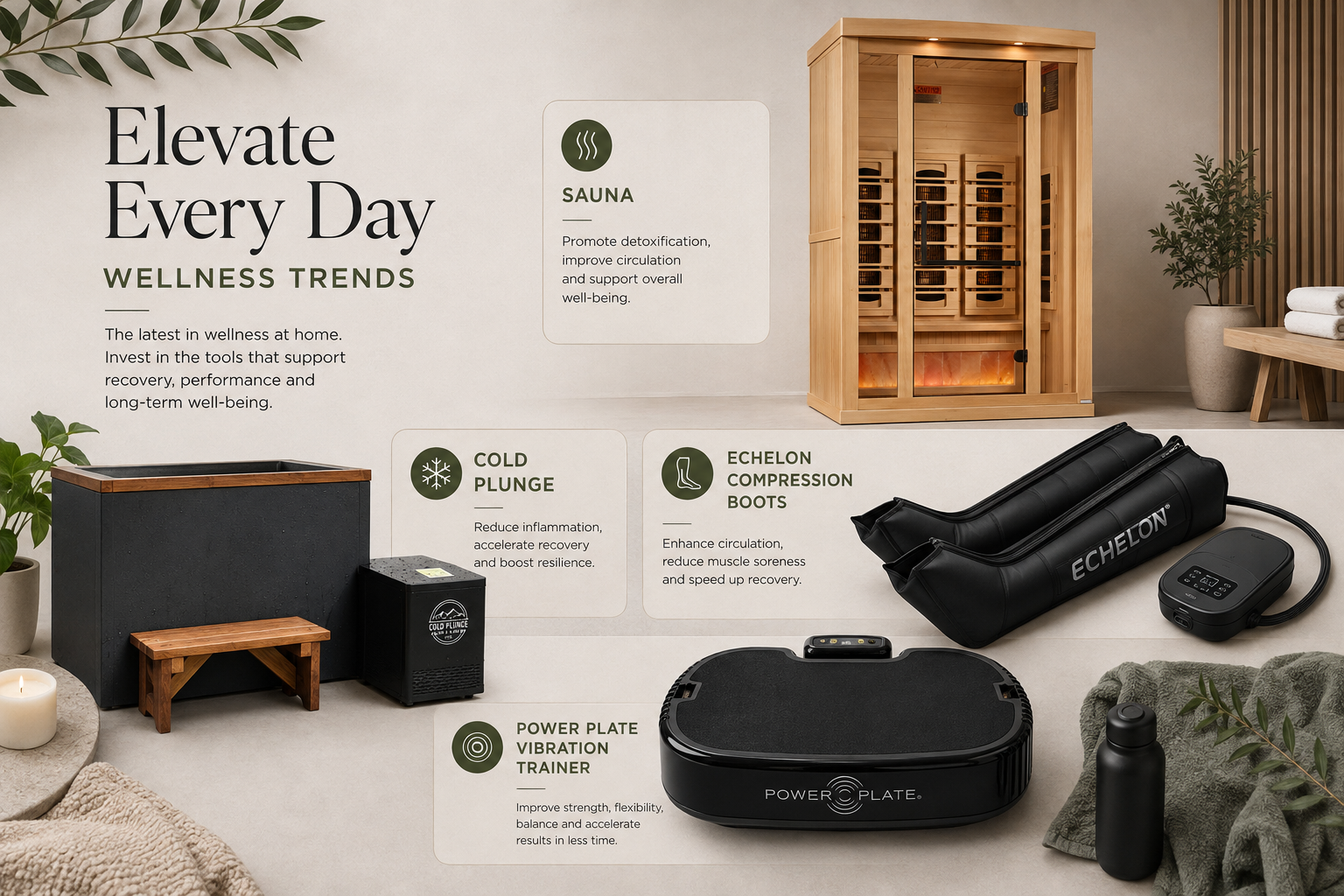
On the heat side, infrared and traditional saunas remain the most requested addition to home wellness spaces we build out, and what's changed is the range of options. Low-EMF and near-zero EMF models, like the Golden Designs Maxxus 4-Person Low EMF FAR Infrared Sauna, have become the default recommendation for anyone spending real time in the cabin regularly, since minimizing EMF exposure matters more the longer and more often you're using it. Hybrid units that combine full-spectrum infrared with traditional stove heat are also gaining ground, giving people both a lower-temperature, longer session option and a classic high-heat Finnish-style sweat in one unit. For anyone who wants an added therapeutic layer, models like the Golden Designs Full Spectrum Sauna with Himalayan Salt Bar and Red Light Therapy fold red light therapy directly into the sauna experience. Our full sauna lineup ranges from compact two-person indoor units to six-person and outdoor models, so space and budget rarely rule this category out entirely.
On the cold side, plunge tubs have gone from a niche athletic recovery tool to a mainstream home gym addition. Compact, smart-controlled units like the Cuboid Cold Plunge make it realistic to fit cold therapy into a small room or garage corner, while combination units like the LifeTrend Alta 2-in-1 Hot & Cold Plunge let you do both sides of contrast therapy in a single piece of equipment, a smart move for anyone tight on square footage. For people who want to test the waters, literally, before committing to a built-in unit, an inflatable cold plunge is a low-commitment way to see whether the routine sticks. You can see the full range in our cold plunge collection.
Here in the Sacramento and Rancho Cordova area, this pairing makes a lot of practical sense given how dry and hot our summers run. A sauna session followed by a cold plunge is a natural fit for a climate where people are already managing heat exposure most of the year, and we hear from a lot of local customers who treat it as their evening wind-down routine rather than a post-workout add-on. Up in the Tacoma and greater Seattle area, the appeal tends to run a little differently. With so much of the year spent in gray, damp weather, a sauna session becomes less about matching the climate and more about counteracting it, giving people a reliable dose of dry heat and circulation support when the outdoors isn't offering much of either.

Compression and Vibration: The Recovery Tools That Actually Get Used
Not every recovery trend requires a dedicated room. Compression therapy has quietly become one of the most-used pieces of recovery equipment we sell, largely because it fits into an evening on the couch instead of requiring a separate session. Boots like the Echelon Compression Boots use zone-controlled, adjustable pressure to mimic the muscle-pumping action that naturally moves blood and lymphatic fluid back toward the heart, and they've become a popular add-on for people who already own strength or cardio equipment but haven't addressed the recovery side of the equation. The appeal is convenience: thirty minutes with a book or the TV on, boots doing the work, no active effort required.
Whole-body vibration training deserves a mention too, though we've covered it in depth elsewhere. Vibration platforms have earned a permanent spot in serious home gyms, not just for the fast warm-ups they're known for, but increasingly as a recovery and circulation tool in their own right. If you're curious which model fits your space, our vibration trainer lineup and dedicated guide cover that ground thoroughly.
What ties compression and vibration together as a 2026 trend is passivity, in the best sense. These are tools that do meaningful physiological work without asking you to be disciplined about form or motivation on a tired evening, which is exactly why they're seeing such strong adoption in home gyms right now.
Mobility Training Is Having a Moment, and It's Not Going Away
If recovery equipment is one half of the 2026 story, mobility and low-impact strength training is the other. For years, mobility work got treated as a five-minute afterthought before the "real" workout. That's shifting, and it's shifting because more people, across a much wider age range, are recognizing that joint health and range of motion determine how long they get to keep training hard, not just how they feel on a given day.
Pilates reformers are the clearest expression of this trend in the home gym space. What used to be a boutique studio experience has become a legitimate home equipment category. Studio-quality units like the Merrithew V2 Max Reformer bring the same spring-loaded resistance and full-body control training you'd find in a dedicated Pilates studio into a home setting, while compact, stackable options like the Peak Pilates Fit Reformer are built for smaller spaces without cutting corners on quality. Our full Pilates collection has grown considerably over the past couple of years, and it's not slowing down.
Functional trainers are part of this same shift, since cable-based resistance naturally supports the multi-planar, joint-friendly movement that mobility-focused training emphasizes. A well-built functional trainer, like the BodyCraft XFT Functional Trainer, lets you move seamlessly between heavier strength work and lighter mobility and stability drills without switching equipment, which fits how people are actually training in 2026: fewer rigid, single-purpose workouts, more sessions that blend strength, mobility, and control in the same hour.
A few things point to this trend having real staying power rather than being a passing fad: it's being driven partly by an aging but still highly active population that wants to keep training hard without accumulating joint issues, physical therapists and trainers are recommending mobility-focused equipment more consistently than in years past, and the equipment itself has improved significantly, with home reformers and functional trainers now genuinely comparable to commercial-grade units.
Smart Features Are Everywhere, But Not All of Them Matter
I'd be leaving something out if I didn't mention connected and app-based fitness tech, since it's part of the 2026 conversation. Touchscreen consoles, app-guided programming, and AI-adjusted intensity have made their way into everything from massage chairs to strength equipment, and some of it is a real improvement. Smart body-scanning on massage chairs that automatically adjusts to your height and shoulder width, for example, solves a real problem for households where multiple people share the same equipment.
Where I'd encourage some skepticism is tech that exists mainly to justify a subscription fee rather than improve the actual experience. A good warm-up, a good stretch, or a good massage doesn't need an app to work, so before paying a premium for connected features, it's worth asking whether the smart functionality solves a real problem for your household or just adds a recurring cost to something that worked fine without it.
The Home Gym Is Becoming a Wellness Room, Not Just a Weight Room
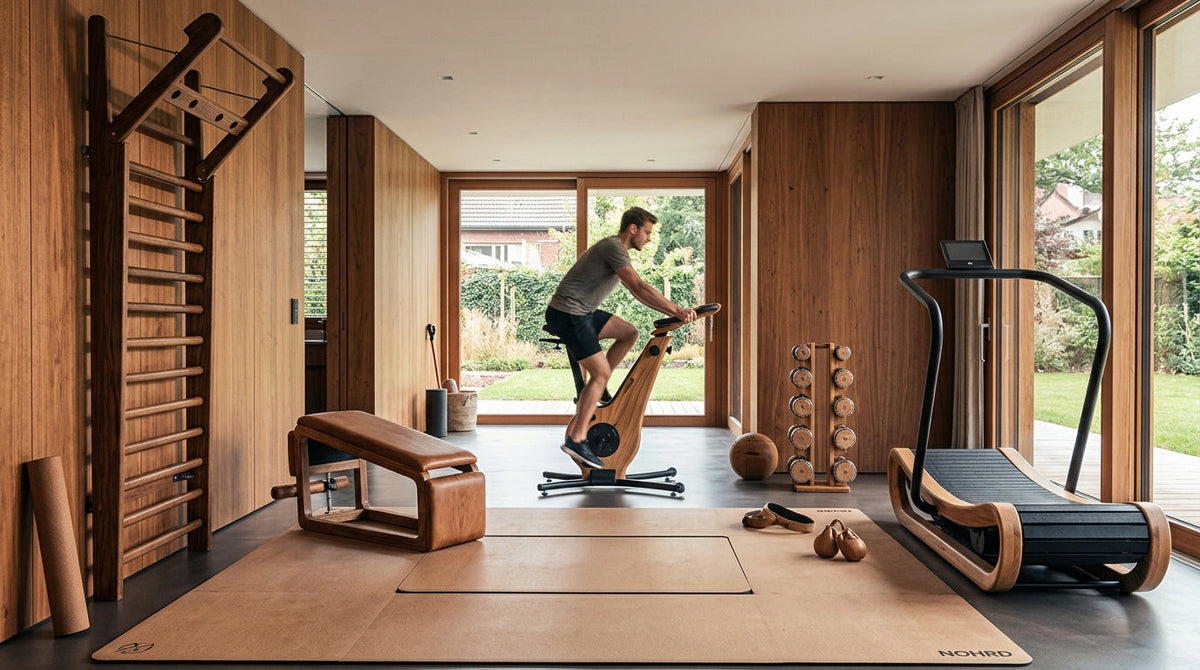
Maybe the most noticeable shift I've seen in 2026 isn't any single piece of equipment, but how people are thinking about the room itself. Home gyms used to be planned around one question: where does the rack go? Now, more customers are planning their space around a full routine, with a training zone for strength and cardio and a dedicated recovery corner for a sauna, cold plunge, massage chair, or compression session. We're seeing this especially in garage conversions and spare-room buildouts, where the extra square footage and consistent climate make a combined training-and-recovery room a realistic project. Basement buildouts play a similar role, giving people an indoor space that supports both hard training and wind-down time regardless of what's happening outside. It's changed how we recommend equipment, too: instead of asking only what you want to lift, we're increasingly asking what your whole week of training and recovery looks like, and building the room around that fuller picture.

A Few Trends I'd Skip (For Now)
Not everything getting attention right now is worth your money. A handful of gadget-heavy recovery tools lean more on marketing than on any meaningful physiological benefit, and I'd rather steer you toward the categories with real evidence behind them: heat and cold exposure, compression, vibration, and mobility training all have decades of use in clinical and athletic settings, a meaningfully different track record than something that showed up on social media six months ago. If a product's main selling point is that it's trending rather than that it solves a specific problem you actually have, it's worth waiting a season to see if it holds up.
The bigger picture for 2026 is straightforward: the equipment worth adding to your home gym this year supports the full cycle of training and recovery, not just the training half. Whether that means a sauna and cold plunge combination, a set of compression boots for the couch, or a reformer that finally gets mobility work into your routine, the trends holding up this year are backed by real physiology rather than a trending hashtag.
Share:
Corporate Campus Fitness Centers: Designing a Space Employees Actually Use
True Fitness for Commercial Facilities: Which Treadmill Fits Your Gym?