


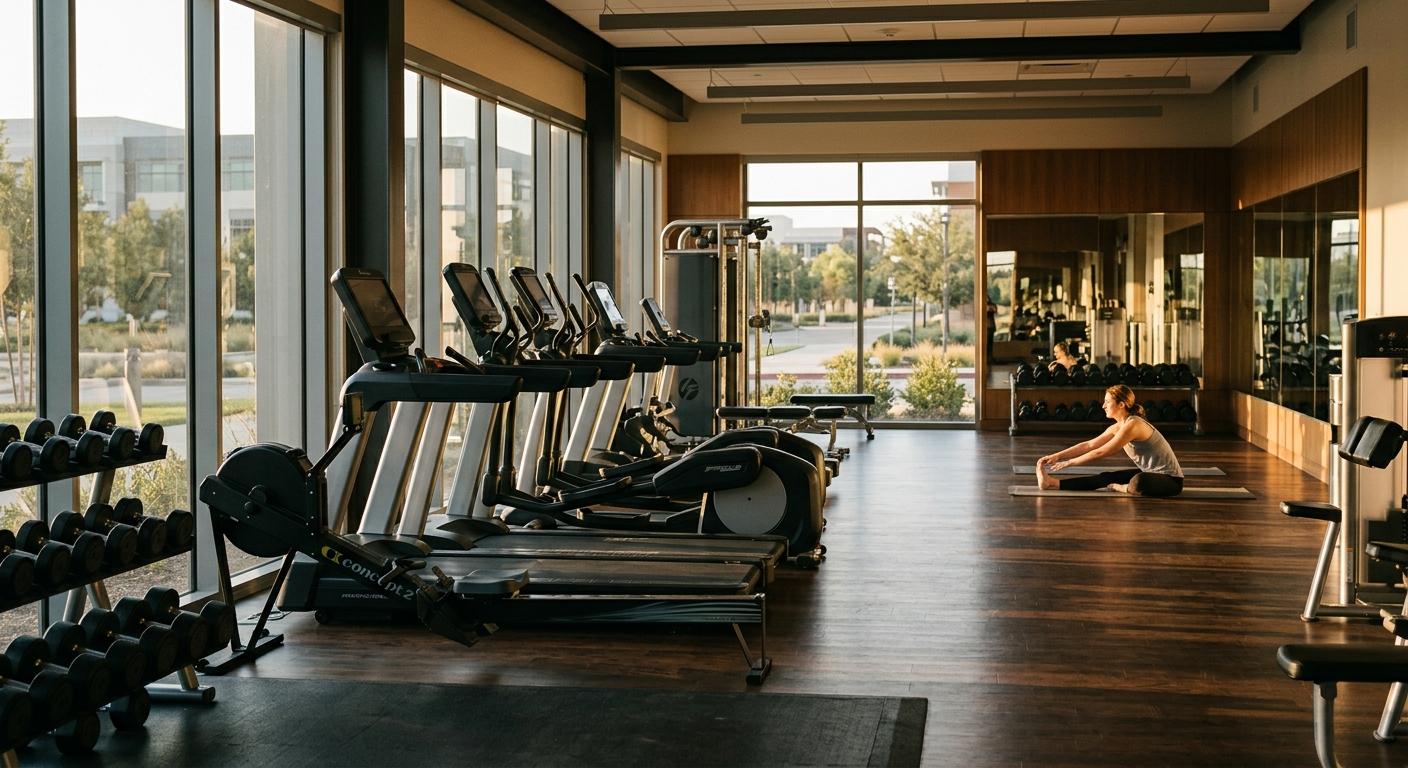
Corporate Campus Fitness Centers: Designing a Space Employees Actually Use
If you've ever toured a corporate campus fitness center on move-in day, you know the feeling. Brand-new equipment gleaming under the lights, a clean rubber floor that still smells faintly of the factory, and a facilities manager beaming with pride. Fast forward six months, and it's a different story: three treadmills get used, the squat rack collects dust, and half the department doesn't even know the space exists. Our commercial department has outfitted spaces for over 30 years, and we've walked into more than a few of these underused rooms to figure out what went wrong.
Here's the truth nobody likes to hear during the planning phase: a corporate campus fitness center isn't a smaller version of a hotel gym, and it isn't a glorified home gym with a company logo on the wall. It's an entirely different, serving hundreds or thousands of employees with wildly different fitness levels, schedules, and goals, often spread across multiple buildings on a single campus. Getting it right takes more than a big budget and a vendor catalog. It takes a plan that starts with how people actually behave, not how the space looks in a rendering.
What Actually Separates a Campus Fitness Center From a Small Office Gym
A lot of companies lump "corporate wellness" into one bucket, but there's a real difference between a break room with a couple of dumbbells and a dedicated fitness center built to serve an entire employee population. Campus facilities usually have the square footage and budget to support multiple zones: cardio, strength, functional training, recovery, and sometimes group fitness or locker rooms with showers. That scale is an advantage, but it's also where things go sideways. More space and more equipment options mean more decisions, and more chances to build something that looks impressive but doesn't match how your workforce actually wants to train.
The campuses that get it right treat the fitness center the way they'd treat any other piece of workplace infrastructure, something that gets used daily, needs maintenance, and has to earn its keep. The ones that get it wrong treat it like a lobby feature, something to show off during recruiting tours and then forget about.
Design the Space Around How People Actually Train
Before anyone talks equipment brands or finishes, we always push clients to think about flow. Where do employees come from? Are they walking over on a lunch break in work clothes, or driving in early before a shift and changing into gear? Do departments tend to show up in groups after a certain meeting block? These details shape everything from locker placement to how far the cardio machines sit from the entrance.
A well-designed corporate campus fitness center generally breaks into a few functional zones rather than one big open room:
- A cardio zone near windows or entry points, since natural light and visibility tend to pull people in
- A strength and free-weight zone with enough clearance around racks and platforms for safe lifting
- A functional training or turf zone for stretching, mobility work, and equipment-free movement
- A quieter recovery corner, which is the zone most campuses skip and later regret
Zoning isn't just about aesthetics. It's about noise control, sightlines, and making sure a nervous first-timer doesn't have to walk past a group of serious lifters just to get on a treadmill. That single design choice, more than almost anything else, determines whether new employees ever come back for a second visit.
Cardio Equipment That Can Handle Real, Daily Volume
This is where a lot of corporate buyers underestimate what they need. Residential-grade cardio equipment simply isn't built for a facility that might see 200 employees rotate through in a single day. You need commercial-duty machines with motors and frames rated for that kind of use, plus consoles simple enough that someone can hop on during a 30-minute break without hunting for a manual.
We typically point corporate facilities toward proven commercial cardio lines. The True Fitness Performance Series PS-3000 Treadmill is a workhorse for high-traffic environments, and for campuses that want something with a sharper console experience, the True Fitness Launch Treadmill has become a favorite among our commercial clients. If budget flexibility across buildings matters, the Star Trac 4 Series Treadmill gives you commercial durability at a strong value point, which is useful when you're outfitting multiple rooms across a campus rather than a single gym.
Don't overlook variety here either. Not every employee wants to run. Rowers, stationary bikes, and step machines pull in people who'd otherwise skip cardio altogether, and a rotation of formats also reduces wear on any single machine. A real consideration when your fitness center doesn't close at night the way a commercial gym franchise does.

Strength Training for Every Employee, From First-Timers to Power Lifters
Strength areas are where corporate fitness centers either become genuinely inclusive or quietly turn into a space that only the already-fit feel comfortable using. The fix isn't complicated, but it does require intention: pair selectorized, easy-to-learn machines with free-weight equipment for people who are further along in their training.
Functional trainers are one of the best investments a campus can make because they flex to serve both crowds. The Hoist Mi6 Functional Training System handles hundreds of exercise variations in a relatively compact footprint, which matters when you're trying to fit strength, cable, and accessory work into a shared room. For campuses with more square footage to work with, the Hoist Mi7 Smith Ensemble Functional Training System combines a Smith machine with functional trainer arms, giving employees a guided, safer entry point into barbell-style lifts before they graduate to free weights.
For the free-weight side, a solid rack is non-negotiable. We've outfitted plenty of corporate spaces with the Hoist HF5970 Squat Rack for its safety features and smaller footprint, and for facilities that want a rack built for heavier, more serious training, the BodyCraft RFT PRO Rack Functional Trainer bridges rack-based lifting with cable functionality in one station. Round it out with a quality adjustable bench like the Hoist HF-5165 7-Position F.I.D. Bench, and you've got a strength zone that works whether someone is doing their first assisted squat or training for a half marathon.
Recovery, Mobility, and the Space Nobody Budgets For
If there's one area we see corporate campuses shortchange more than any other, it's recovery. Everyone wants to spend on shiny cardio and stacked strength equipment, and then recovery gets a foam roller bin shoved in the corner. That's a mistake, especially for a workforce that spends most of its day sitting at a desk. Tight hips and stiff shoulders are basically a given in corporate life, and a fitness center that ignores mobility work is ignoring the exact thing most of its population actually needs.
A stretch cage, like the True Fitness Stretch, gives employees a dedicated, structured space to work on flexibility and mobility using assisted stretching techniques, rather than awkwardly sprawling out on the strength floor. Pairing that with foam rollers, resistance bands, and a designated quiet corner goes a long way toward making the fitness center feel like a place for whole-body wellness, not just a room for lifting weights and running.
Flooring and the Details That Determine Whether People Come Back
It sounds minor next to a six-figure equipment order, but flooring shapes the entire feel of a corporate campus fitness center. Cheap flooring shows wear fast, transmits noise to the floors above or below (a real concern in multi-story office buildings), and can actually be dangerous under dropped weights. We always recommend investing in proper rubber flooring rated for commercial gym use, sized correctly for your free-weight and functional zones, rather than trying to stretch a thinner residential product across a high-traffic room.
The same logic applies to smaller details: mirror placement, ventilation, water fountain or bottle-filling station location, and even where you put the trash and towel bins. None of these show up on an equipment spec sheet, but they're often the difference between a space employees rave about and one they quietly avoid.
Building for the Whole Workforce, Not Just the Gym Regulars
A corporate campus fitness center serves accountants, engineers, warehouse staff, and executives, often in the same building. That means equipment needs to accommodate a wide range of ages, mobility levels, and experience with strength training. Adjustable machines, clear signage, and at least a few pieces of adaptive or low-impact equipment send a real signal that the space was built for everyone on the roster, not just the employees who already had a home gym.
This is also where staff training pays off. A short orientation program, even something as simple as a laminated "how to use this machine" card or a scheduled walkthrough during onboarding, dramatically increases usage among employees who might otherwise never set foot in the room out of intimidation.

Partnering With Someone Who's Done This Before
Outfitting a corporate campus fitness center is a bigger lift than most facilities teams expect, and it's not a project you want to run entirely off vendor spec sheets. We've spent over three decades helping companies plan layouts, source commercial-grade equipment across dozens of brands, and manage delivery and installation for offices of every size. Our commercial fitness services team handles everything from initial space planning and 3D renderings to ongoing maintenance agreements, so the room that looks great on opening day still looks and performs great two years later.
If your company is planning a new build, a renovation, or just a much-needed equipment refresh, it's worth getting a second set of eyes on the plan before you commit to a purchase order. You can request a proposal and we'll walk through your space, your headcount, and your goals together.
The Bottom Line
A corporate campus fitness center only earns its budget line if people actually use it. That means designing around real employee behavior, choosing commercial-grade equipment that can take daily abuse, building in recovery space alongside cardio and strength, and paying attention to the small details that make a room feel welcoming instead of intimidating. Do that well, and you end up with more than a nice amenity for the recruiting brochure, you get a space that genuinely supports the people working on your campus every day.

Share:
Spirit XT685 Treadmill Review
Wellness Trends 2026: What's Actually Worth Adding to Your Home Gym