

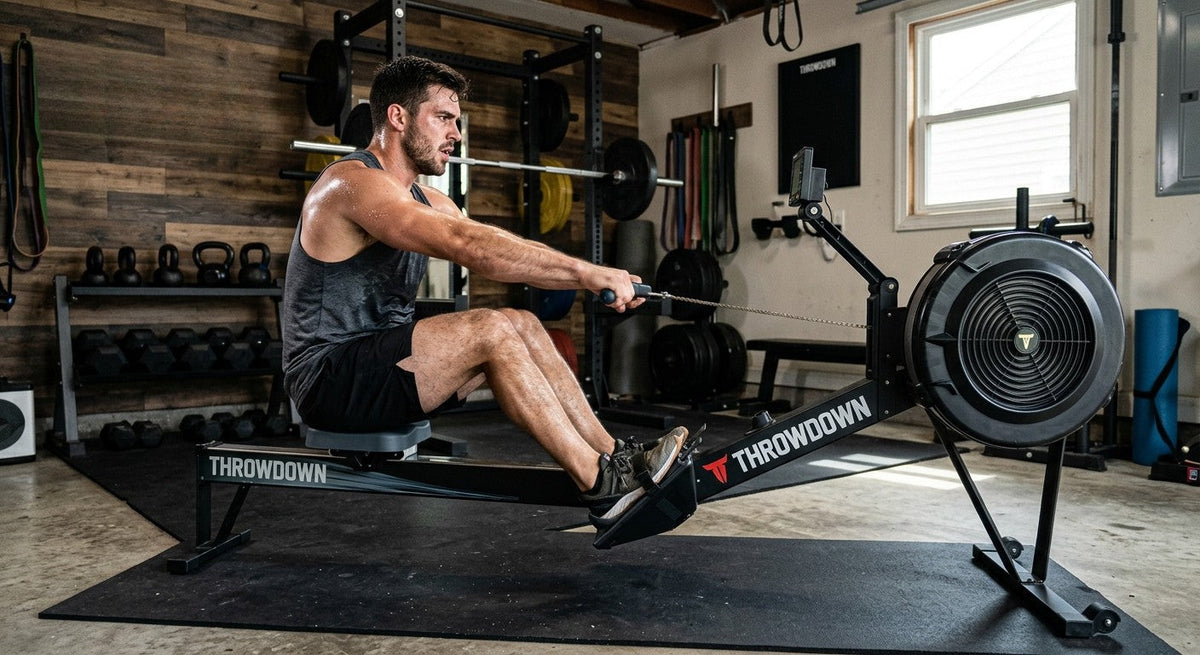
HIIT Workouts You Can Do at Home in 20 Minutes or Less
After more than three decades spent testing equipment, talking to customers on the showroom floor, and watching fitness trends come and go, I can tell you that high-intensity interval training is one of the few "trends" that has earned its staying power. It works, it's efficient, and, it's one of the easiest training styles to do at home with almost no equipment at all. If you've been telling yourself you don't have time to work out, a home HIIT workout is probably the fastest way to prove yourself wrong.
Why 20 Minutes of Home HIIT Actually Moves the Needle
The appeal of interval training isn't just that it's short. It's that short, hard efforts followed by brief recovery periods create a metabolic demand that a slow, steady 45-minute cardio session simply doesn't replicate. Your body keeps burning calories at an elevated rate for hours after you finish, something exercise physiologists call excess post-exercise oxygen consumption, or EPOC. In plain terms, a well-structured 20-minute home HIIT workout can deliver a training effect that rivals a much longer, lower-intensity session, which is exactly why it's become the go-to option for people who are juggling work, kids, and everything in between.
There's also a practical reason home HIIT has taken off: you don't need a gym membership, a commute, or a wall of machines. A kettlebell, a jump rope, or an air bike tucked into a spare bedroom or garage corner is enough to build an effective routine. That accessibility matters. The best program in the world is useless if you never do it, and a 20-minute workout you can start the moment you get home from work is a program you'll actually stick with.
What "Beginner-Friendly" Really Means in a HIIT Routine
A lot of people hear "HIIT" and picture something punishing. All-out sprints, gasping for air, collapsing on the floor. That's not what beginner-friendly interval training looks like, and it's not what produces the best long-term results either. A smart beginner routine uses work-to-rest ratios that let you build capacity gradually. Something like 20 seconds of work followed by 40 seconds of rest is a great starting point, and as your conditioning improves, you can shift toward 30/30 or even 40/20 splits.
The other piece beginners often miss is movement selection. You don't need burpees and mountain climbers on day one. Kettlebell swings, goblet squats, step-ups, and steady-state air bike sprints are all lower-skill, lower-injury-risk movements that still spike your heart rate effectively. The goal in your first few weeks is building a base of movement competency and cardiovascular tolerance, not proving how tough you are. That approach is also what keeps people training six months later instead of quitting after two sore weeks.
What to Look For in a Home HIIT Setup
Before you buy anything, it's worth thinking through what actually makes home equipment usable for interval training, because HIIT places different demands on gear than slow cardio or traditional strength training does.
- Durability under repeated, explosive loading. Interval work means fast transitions and momentum, swinging, slamming, sprinting. Equipment needs to handle that abuse without wearing out or becoming unstable.
- A small footprint. Most home HIIT happens in a spare room, garage, or living room corner, so equipment that's compact or easy to move out of the way matters more than it does in a dedicated gym.
- Quiet operation. If you're working out early in the morning or after the kids are asleep, a squeaky bike or a kettlebell that clangs on hardwood is going to end your workout
- Versatility. The best home HIIT tools do more than one thing. A kettlebell trains strength, power, and conditioning in a single piece of equipment, which matters when space is limited.
Climate matters here too, more than people expect. If you're in the Sacramento or Rancho Cordova area, summer afternoons routinely climb into the high 90s and beyond, which makes an air-conditioned garage or spare room with a bike or a set of kettlebells a far more realistic training environment than trying to do intervals outside in July. Up in the Tacoma and Seattle area, it's the opposite problem, long stretches of grey, wet winters make outdoor sprint work miserable for months at a time. In both cases, a compact home HIIT setup solves a real, local problem rather than being a nice-to-have.

Kettlebells: The Single Best Investment for Home HIIT
If I had to recommend one piece of equipment to someone starting home HIIT from scratch, it would be a kettlebell. Nothing else packs strength training, power development, and cardiovascular conditioning into one compact, relatively inexpensive tool. Kettlebell swings, cleans, snatches, and goblet squats all elevate heart rate quickly while building real strength, you're not just moving fast, you're moving weight fast, which is a combination that's hard to beat for results per minute spent training.
For beginners, I usually steer people toward a set that lets them progress without buying new equipment every few months. The TRX Runner Coated Kettlebells are a great fit here. They run from 4kg up to 40kg across eleven incremental sizes, so you can start light and grow into heavier bells as your technique and conditioning improve. The rubber coating is a practical feature for home use: it protects your floors and cuts down on the clang of iron-on-iron, which matters if you're training in a room with hardwood or if you've got someone sleeping nearby. The flat, gravity-cast base also keeps the bell stable during setup, which reduces the wobble that trips up a lot of beginners on their first few sessions.
If you want to browse the full range of weights and styles, The Fitness Outlet's kettlebell collection is a good place to compare options side by side and find the right starting weight for your fitness level.
Air Bikes: Full-Body Intensity in a Small Footprint
Air bikes have become a staple of HIIT training for a simple reason: the resistance scales automatically with your effort. There's no dial to fiddle with and no guessing, pedal harder and push harder on the handles, and the resistance climbs right along with you. That self-regulating design makes air bikes uniquely beginner-friendly, since a brand-new exerciser and an experienced athlete can use the exact same machine at appropriate intensities without any adjustment.
For home use, I point most customers toward the Body-Solid FB300B Endurance Fan Bike. It's built around a 27-inch steel fan with dual-action arms, so you're getting a genuine full-body interval workout rather than just leg work, and the commercial-grade steel frame and sealed bearings hold up well to the kind of repeated, all-out sprint intervals that HIIT demands. At 97 pounds with transport wheels, it's manageable to reposition in a garage or spare room, and the console tracks the metrics, heart rate, watts, calories, that let you actually measure whether your intervals are improving over time.
If you've got a bit more room and want dedicated interval programming built into the console, the TKO AirRaid Bike is worth a look. It comes preloaded with structured interval protocols, including Tabata-style 20/10 and 10/20 formats, so you can select a program and go rather than watching the clock yourself. Both machines are compact enough for a home gym and quiet enough not to rattle the whole house during an early-morning session. If you want to compare more options, the full lineup of air resistance bikes is a good starting point.

Three Beginner-Friendly Home HIIT Routines to Try This Week
Here are three simple, equipment-light routines that fit comfortably inside a 20-minute window, including warm-up and cool-down. Rotate between them so your body doesn't adapt to the same stimulus every session.
Kettlebell-only circuit (20 minutes): After a 3-minute dynamic warm-up, perform 20 seconds of kettlebell swings followed by 40 seconds of rest, then 20 seconds of goblet squats followed by 40 seconds of rest, then 20 seconds of alternating kettlebell cleans followed by 40 seconds of rest. Repeat that three-movement sequence for five total rounds, then finish with a 3-minute cool-down and stretch.
Air bike sprint intervals (20 minutes): Warm up for 3 minutes at an easy pace on the bike. Then alternate 20 seconds of an all-out sprint with 40 seconds of easy pedaling for eight rounds. Finish with a 3-minute easy-pace cool-down. This is one of the simplest and most effective HIIT protocols there is precisely because the bike's resistance does the intensity regulation for you.
Combo conditioning circuit (20 minutes): Warm up for 3 minutes, then alternate 30 seconds on the air bike with 30 seconds of kettlebell swings, resting 30 seconds between each pairing, for six total rounds. This one tends to be the toughest of the three because it never lets your heart rate settle, so save it for a day when you're feeling strong.
Getting the Most Out of Every 20-Minute Session
A few coaching notes that make a real difference over time: always spend a few minutes warming up, even when the workout itself is short. Cold muscles moving explosively is how strains happen. Pay attention to your breathing during rest periods rather than just standing there; controlled breathing speeds recovery between rounds and lets you hit your next interval harder. And resist the urge to add more rounds or heavier weight every single session. Progression in HIIT should be gradual, a slightly shorter rest period this week, a slightly heavier kettlebell next month. The whole point of interval training is sustainable intensity, not one brutal session followed by a week off to recover.
Consistency is what actually produces results with home HIIT, more than any single workout does. Three 20-minute sessions a week, done consistently for eight to twelve weeks, will do more for your conditioning, strength, and body composition than an occasional 90-minute gym marathon ever will. That's the real case for building a simple, effective setup at home: it removes every excuse standing between you and the next session.


Share:
Thorne vs Generic Supplements: Is the Quality Difference Worth It?