


For a long time, yoga and strength training were treated as opposites. One was seen as slow, flexible, and restorative, while the other was framed as intense, powerful, and performance driven. In reality, the most resilient and capable bodies tend to come from combining both.
Strength training builds muscle, bone density, and power. Yoga improves mobility, balance, and body awareness. When these two approaches are used together, they create a training routine that not only improves performance but also helps reduce injury risk and supports long-term consistency.
At The Fitness Outlet, we often talk with customers who want to feel strong without feeling stiff, or who lift regularly but struggle with tight hips, sore shoulders, or recurring aches. Blending yoga and strength training into the same weekly routine is one of the most effective ways to address those issues without adding more workout time.
Why Yoga and Strength Training Work Better Together
Strength training places controlled stress on muscles and joints, which is necessary for growth and progress. Over time, however, repeated lifting patterns can shorten muscles, limit range of motion, and create imbalances if mobility is not addressed.
Yoga helps counteract that by improving flexibility, joint control, and breathing mechanics. Many yoga poses also build strength in stabilizing muscles that traditional lifting sometimes misses, especially around the hips, shoulders, and core.
When combined thoughtfully, yoga and strength training support:
improved movement quality during lifts
better posture and alignment
faster recovery between workouts
reduced risk of overuse injuries
Rather than slowing progress, mobility work often allows people to train more effectively and with less discomfort.

How to Combine Yoga and Strength Training Without Overdoing It
One of the biggest mistakes people make is treating yoga as an afterthought or trying to cram everything into a single session. The goal is balance, not exhaustion.
Yoga can be used in three primary ways alongside strength training:
as a dedicated mobility or recovery session
as a short flow on rest days
or as a warm-up or cool-down around lifting sessions
The key is intention. Strength days should still focus on lifting well, while yoga sessions should emphasize movement quality, breathing, and control rather than pushing flexibility aggressively.
A Sample Weekly Schedule That Balances Both
This example shows how yoga and strength training can coexist in a realistic week without overwhelming your schedule.
Monday: Strength training (upper body)
Tuesday: Yoga or mobility-focused flow
Wednesday: Strength training (lower body)
Thursday: Rest or light yoga
Friday: Full-body strength training
Saturday: Short yoga session or recovery flow
Sunday: Rest
This structure allows strength workouts to stay productive while yoga supports recovery and movement between lifting days.
Using Yoga to Improve Strength Training Performance
Yoga can directly enhance how you perform strength exercises. Improved hip mobility can lead to deeper, more stable squats. Better shoulder mobility can improve pressing and pulling mechanics. Core engagement learned through yoga carries over to lifts like deadlifts and rows.
Many lifters find that even one or two yoga sessions per week noticeably improve how their body feels during strength training. Movements feel smoother, joints feel more supported, and recovery improves.
Compact Equipment That Supports Both Yoga and Strength Training
One of the advantages of combining yoga and strength training is that it does not require a large footprint or excessive equipment.
At The Fitness Outlet, we carry several compact pieces that work well for both styles of training.
A quality adjustable bench, such as those from Body-Solid or BodyCraft, supports traditional strength exercises while also providing a stable surface for seated stretches, step-throughs, and supported poses.
Resistance bands are another versatile tool. They can be used for strength accessories like rows and presses, as well as for yoga-style mobility work, assisted stretches, and controlled activation exercises.
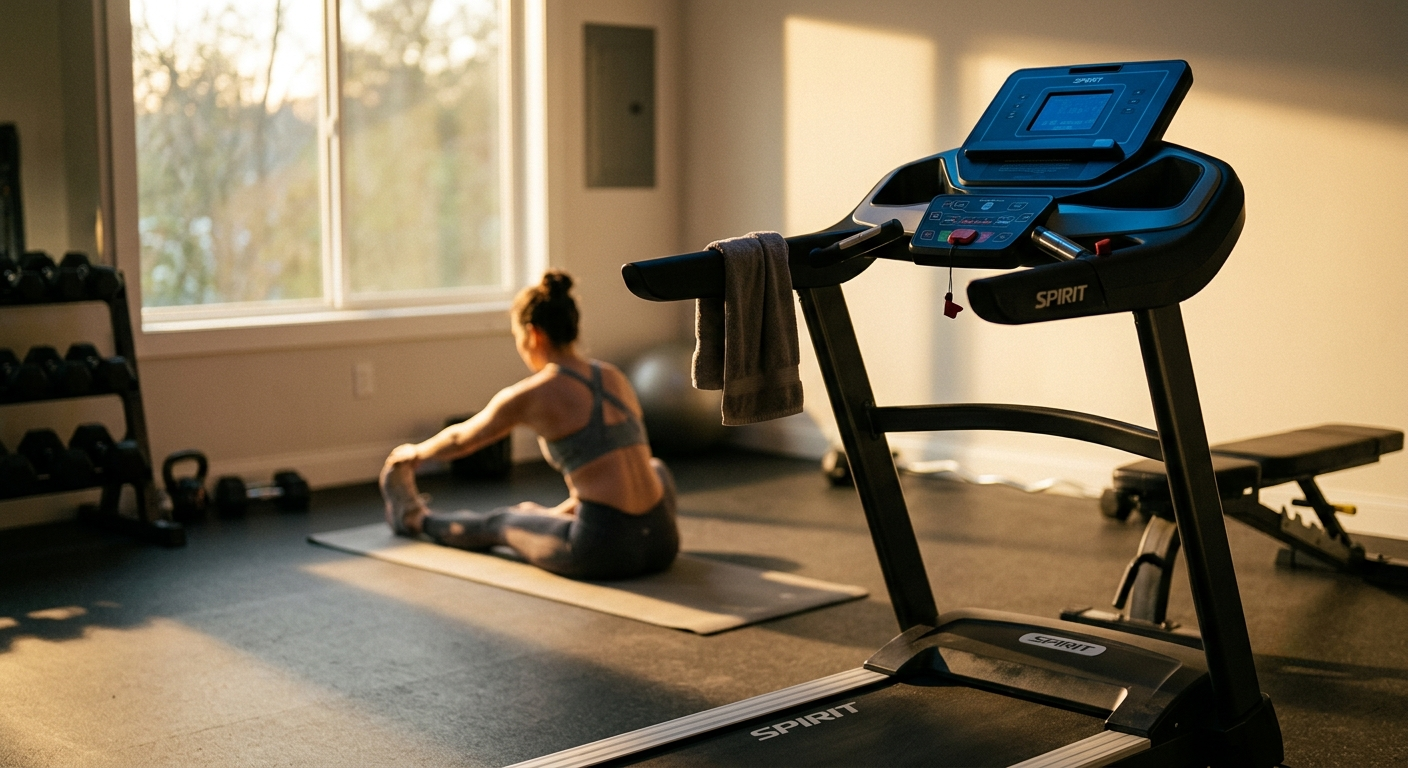
A mat or padded flooring improves comfort during yoga sessions and provides a stable base for bodyweight strength movements. These small additions make it easier to move between lifting and mobility work without changing spaces or setups.
Injury Prevention Through Balanced Training
Injuries often occur not because someone is weak, but because they move poorly under load. Tight hips, limited shoulder mobility, or poor core control can all increase stress on joints during strength training.
Yoga helps address these limitations by improving range of motion and teaching controlled movement through that range. When paired with proper strength training, this creates joints that are both mobile and stable, which is essential for long-term performance.
This combination is especially valuable for people training at home, where recovery tools and professional oversight may be limited.
Making the Routine Sustainable Long Term
The best workout plan is not the most aggressive one. It is the one you can maintain consistently.
By combining yoga and strength training, you create a routine that supports both performance and longevity. Strength days feel better, recovery improves, and training becomes something you can sustain year after year rather than cycle on and off.
At The Fitness Outlet, we believe fitness equipment should support how people actually train. Compact benches, resistance bands, and thoughtful setups make it easier to build routines that feel balanced instead of extreme.


Share:
Walking HIIT on a Treadmill: Burn Calories Without Running
Top Strength Machines for Full-Body Workouts