


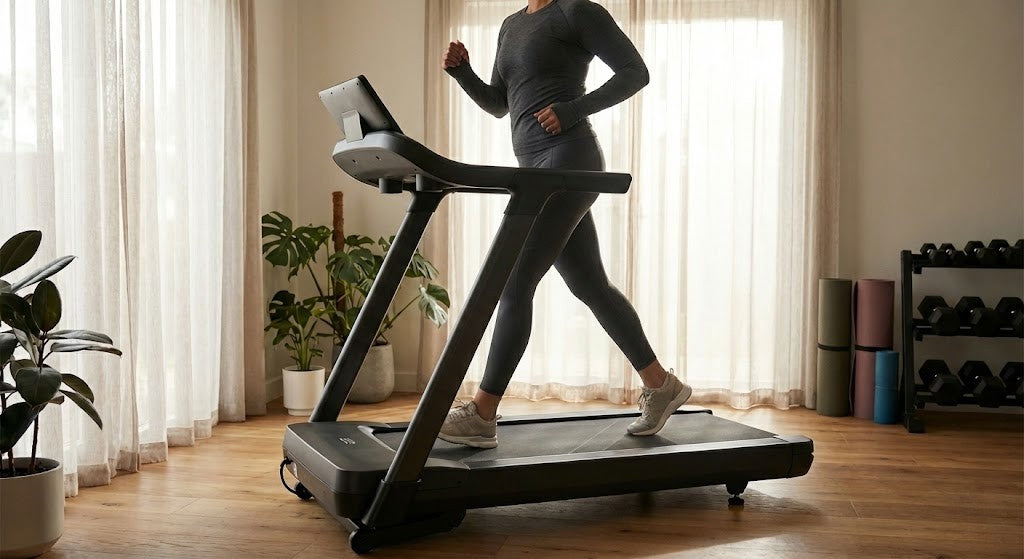
HIIT workouts often get associated with sprinting, heavy breathing, and pushing to exhaustion. For many people, that image alone is enough to turn them away from interval training altogether. The good news is that you do not need to run to get the benefits of HIIT.
Walking HIIT on a treadmill is one of the most effective and sustainable ways to burn calories, improve cardiovascular fitness, and stay consistent, especially for those who prefer lower-impact training. By combining fast walking with changes in incline and intensity, you can elevate your heart rate and challenge your body without the joint stress that comes with running.
At The Fitness Outlet, we regularly work with customers who want results but also want workouts they can stick with long term. Walking HIIT fits that goal perfectly. Below is a complete guide to walking HIIT treadmill workouts, including how they work, how to structure them, beginner through advanced routines, a quick-reference chart, and treadmill recommendations built for incline and interval training.
Why Walking HIIT Works
Walking HIIT follows the same principles as traditional HIIT. Instead of sprinting, you alternate periods of fast, purposeful walking with recovery intervals at a slower pace. The intensity comes from speed, incline, or a combination of both.
Incline walking in particular engages the glutes, hamstrings, and calves while driving the heart rate up quickly. This allows you to burn calories efficiently without the repetitive impact of running. For many people, walking HIIT feels more approachable and easier to recover from, which often leads to better consistency over time.
This style of training is especially effective for beginners, joint-conscious exercisers, and anyone returning to fitness after time away.

Walking HIIT Workout Overview (Quick Reference)
| Level | Total Time | Work Interval | Recovery Interval | Incline Focus | Best For |
|---|---|---|---|---|---|
| Beginner | 20–25 min | 30–45 sec | 90 sec | Low incline | Building confidence and routine |
| Intermediate | 25–30 min | 45–60 sec | 60–75 sec | Moderate incline | Increasing calorie burn |
| Advanced | 30 min | 60 sec | 45–60 sec | Steep incline | Maximum walking intensity |
This chart provides a quick snapshot of how walking HIIT progresses. The sections below explain how to perform each workout safely and effectively.
How to Warm Up Before a Walking HIIT Workout
A proper warm-up prepares your muscles and joints for incline and faster movement. Spend five to eight minutes gradually increasing pace, starting with an easy walk and working up to a brisk pace.
If your workout includes incline, introduce a slight incline during the warm-up so your legs are ready. By the end of the warm-up, your breathing should be elevated, but you should still feel relaxed and in control.
Beginner Walking HIIT Treadmill Workout
If you are new to walking HIIT, the focus should be on learning how intensity feels without overwhelming your body. Speed stays comfortable, and incline remains relatively low.
This workout lasts about 20 to 25 minutes and is designed to feel challenging but sustainable. After warming up, increase your pace to a fast walk that makes conversation difficult but still possible. Hold that pace for 30 to 45 seconds, then reduce speed and incline for 90 seconds of recovery.
Repeat this cycle six to eight times, then finish with a five-minute cool-down at an easy pace. As this workout becomes easier, you can slightly increase incline or shorten recovery periods.
Intermediate Walking HIIT Treadmill Workout
Once you are comfortable with walking intervals, intermediate walking HIIT adds more incline and slightly longer work periods.
This workout typically lasts 25 to 30 minutes. After warming up, increase incline to a moderate level and walk at a strong, purposeful pace for 45 to 60 seconds. You should feel your heart rate climb quickly. Recover by lowering incline and slowing your pace for 60 to 75 seconds.
Repeat the interval eight to ten times before cooling down. This level is excellent for improving endurance and increasing calorie burn without running.
Advanced Walking HIIT Treadmill Workout
Advanced walking HIIT is surprisingly demanding. By combining steep incline with sustained fast walking, you can push cardiovascular limits while keeping impact low.
This workout lasts around 30 minutes. After a thorough warm-up, increase incline to a challenging level and walk hard for 60 seconds. Recovery periods are shorter, typically 45 to 60 seconds, and incline remains slightly elevated even during recovery.
Repeat the interval six to eight times, then finish with a full cool-down. Proper recovery days are important at this level, even though the workout is walking-based.
Cooling Down and Recovery
Cooling down helps your heart rate return to normal and reduces post-workout stiffness. Walk at an easy pace for at least five minutes after your workout.
Light stretching for calves, hamstrings, hips, and lower back supports recovery and helps maintain mobility, especially when incline walking is part of your routine.
Choosing a Treadmill for Walking HIIT
Walking HIIT places different demands on a treadmill than running. Incline capability, motor strength, deck stability, and smooth transitions matter more than top speed.
At The Fitness Outlet, we guide customers toward treadmills designed to handle frequent incline changes and sustained walking intensity. Models built for light commercial or performance-focused home use tend to perform best.
For walking HIIT workouts, we often recommend treadmills like the TRUE Alpine Runner, which excels at incline-based training and provides a stable, joint-friendly walking surface. The Spirit Fitness XT685 is another strong option, offering excellent stability and smooth incline adjustments for interval walking. For those focused on consistent incline walking without running, these models deliver reliability and comfort over time.
How Often Should You Do Walking HIIT?
Most people benefit from walking HIIT two to three times per week. Because the impact is lower than running HIIT, recovery tends to be quicker, but rest days are still important.
On non-HIIT days, steady walking, strength training, or mobility work helps create a balanced routine.
Final Thoughts on Walking HIIT Training
Walking HIIT on a treadmill proves that you do not need to run to get meaningful results. By combining speed, incline, and structured intervals, walking HIIT delivers efficient calorie burn, improved endurance, and a workout style that many people find more sustainable long term.
At The Fitness Outlet, we believe the best workout is the one you can maintain. With the right treadmill and a smart walking HIIT structure, consistency becomes far easier to achieve.

Share:
Creating a Seasonal Workout Plan for Year-Round Results (Without Burning Out)
Combining Yoga and Strength Training for Better Performance, Mobility, and Longevity