


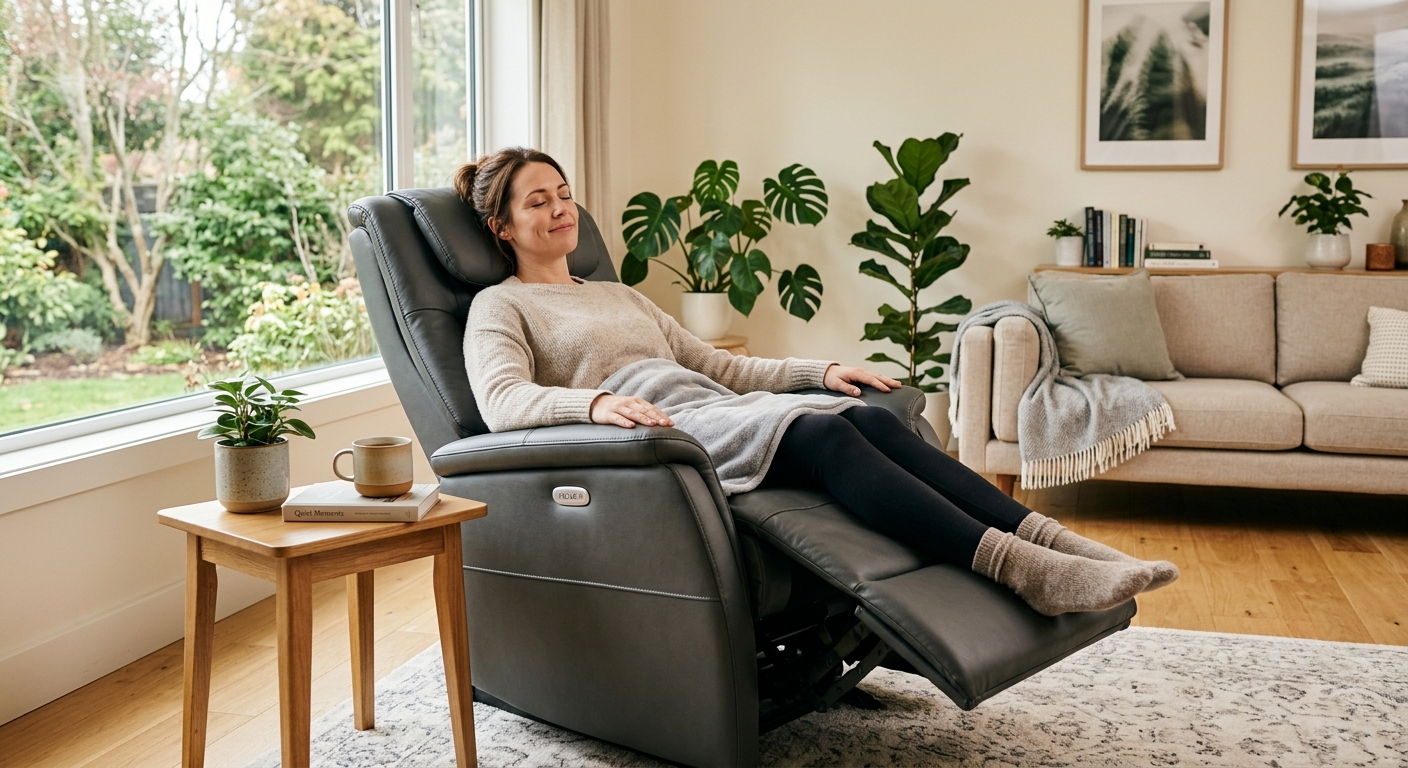
Massage Chair Buyer's Guide: How to Choose the Right One
After spending more than three decades helping people equip their homes and gyms for better health, I can tell you that massage chairs generate more questions than almost anything else we sell. It makes sense. A treadmill or a squat rack is a known quantity, but a massage chair is a big investment wrapped in unfamiliar terms like "SL-track," "zero gravity," and "4D dual core." Customers walk into our Rancho Cordova showroom, or call in from the Tacoma and Seattle area, wanting the same thing: a straightforward answer to "which one should I actually buy?" This guide is my attempt to give you that answer, using the four massage chairs we carry at every price point, from an entry-level daily-use chair to a flagship model built to compete with anything you'd find in a five-star spa.
Why a Massage Chair Is Worth Considering in the First Place
Before getting into the comparison, it's worth addressing the obvious question: is a massage chair actually a good investment, or is it a novelty that ends up as an expensive place to pile laundry? In my experience, the answer depends entirely on how you use it. A massage chair that gets used for ten minutes a day, every day, will pay for itself in avoided physical therapy co-pays, missed workdays from a stiff back, and an expensive cost for a professional massage session. A massage chair that gets used twice and then forgotten is, frankly, a waste of money regardless of price.
The people who get the most value tend to fall into a few categories: desk workers who sit for eight-plus hours a day and develop chronic neck and shoulder tension, athletes and weekend warriors who need faster recovery between training sessions, older adults managing circulation issues or arthritis-related stiffness, and anyone dealing with the kind of everyday stress that settles into the lower back and never quite leaves. If you recognize yourself in one of those descriptions, a massage chair usually earns its keep. If you're buying one purely because it looks impressive in the living room, I'd encourage you to rethink.
Understanding the Technology: 2D vs. 3D vs. 4D vs. Dual Core
This is where most buyers get stuck, so let's clear it up. The "D" number refers to how the massage rollers move. A 2D system moves up and down along the track and in and out to control pressure. That's it, two dimensions of movement. It's simple, but a well-built 2D chair like the LifeSmart Motion 2D Massage Chair can still deliver a genuinely satisfying massage, especially for people who want consistency over customization.
A 3D system adds a third dimension: roller depth that adjusts independently, so the chair can press deeper into a knot in your shoulder and then ease off as it moves to a less tense area. This is a meaningful upgrade in how "human" the massage can feel, and it's the core technology in the LifeSmart 3D Massage Chair.
4D technology adds a fourth variable: speed and rhythm. The rollers can accelerate, decelerate, and vary their pace mid-session, which is the closest a machine gets to replicating the unpredictable, responsive touch of a human massage therapist. The LifeSmart Nova 4D Massage Chair and the LifeTrend Luxe 4D Dual Core Massage Chair both use 4D systems, but the Luxe takes it a step further with "dual core" technology, meaning it has two independent roller mechanisms, one dedicated to the neck and one to the back, so both zones can work at different intensities simultaneously instead of one roller system doing double duty.
None of this means you need the most advanced technology to be happy. It means you should match the technology to your actual pain points. Someone with generalized daily tension may not notice a dramatic difference between 2D and 4D. Someone recovering from an old back injury or managing chronic muscle tightness will likely feel the difference in the first few minutes.

Comparing Our Four Massage Chairs
Here's how the lineup breaks down, starting with the most accessible option and moving up to the flagship.
LifeSmart Motion 2D Massage Chair $2,999. This is our entry point, and it's a smart one. The Motion uses an 8-roller 2D fixed system that targets the spine consistently, paired with three-position zero gravity recline, 30 airbags, and lumbar heat. What sets it apart at this price is the smart control setup: a 4.3-inch touchscreen tablet plus AI voice control, so you can start a program without fumbling for a remote. Six preset programs cover common needs like Neck & Shoulder, Refresh, and Waist & Back. If you're buying your first massage chair and want to see whether it becomes part of your daily routine before committing to a bigger investment, this is where I'd point most people.
LifeSmart 3D Massage Chair $3,999 (currently discounted from $4,999). This is the natural step up for anyone who wants a deeper, more adaptive massage without jumping to the 4D price bracket. The SL-track design follows the natural curve of your spine from neck to thighs, and the chair's smart body scanning technology maps your height and shoulder width before each session so the rollers land in the right spot every time. It also has a notably wide 21-inch seat, which makes it a strong option for larger or broader-framed users who find some massage chairs cramped. With 38 airbags, 12 auto programs, six massage techniques, and heat therapy at the waist and foot arch, it's a genuine mid-tier workhorse.
LifeSmart Nova 4D Massage Chair $5,999. The Nova is where things start to feel like a true spa experience. Its 54-inch SL-track is longer than the standard chair's, giving even taller users full neck-to-thigh coverage, and the 4D roller system with auto body scan adjusts depth and rhythm in real time. I'm particularly fond of the space-saving design here: it needs only about two inches of wall clearance to fully recline, which matters a lot for anyone working with a smaller room, a condo, or an apartment. Wrapped in faux leather and finished with a more refined aesthetic than the entry-level chairs, the Nova is a strong choice for someone who wants premium performance without going all the way to flagship pricing.
LifeTrend Luxe 4D Dual Core Massage Chair $8,999. This is our top-tier chair, and it's built for people who want the closest thing to a professional massage therapist available at home. The dual-core system lets the neck and back rollers operate independently, so you can get a firmer back massage while the neck receives a gentler touch, or vice versa. With 46 airbags, heating zones across the back, seat, and calves, a 53-inch IL Flex Frame Track, and 24 massage programs, it's genuinely comprehensive. The 10-inch touchscreen tablet and voice control make it easy to use despite the added complexity, and its 400-pound weight capacity is the highest in our lineup, making it a good fit for a wider range of body types. If your household will get heavy daily use out of a massage chair, or you're outfitting a dedicated recovery room, this is the one to look at seriously.
What to Actually Think About Before You Buy
Beyond the massage technology itself, a few practical factors tend to matter more than people expect. Room clearance is the big one: zero gravity chairs need space to recline, and while models like the Nova are designed to hug the wall, you should still measure your intended spot, including the fully reclined length, before ordering. Weight capacity matters too, and it varies across this lineup, from standard capacities up to the Luxe's 400-pound rating. Seat width is another detail that's easy to overlook. If your looking for a more spacious seat, the R8Q03's has a 21-inch wide seat.
It's also worth thinking about who else will use the chair. If it's a shared household item, adjustable body scanning technology (found on the 3D, Nova, and Luxe models) does a lot of the customization work automatically, which matters more when multiple people with different builds are using the same chair throughout the week.
A few considerations to keep in mind:
- Measure your space, including full recline depth, not just the chair's footprint at rest
- Consider your household's range of body types and check seat width and weight capacity accordingly
- Think about how often you'll realistically use it; daily use justifies a bigger investment
- Ask about delivery and setup, since these chairs are large freight items that benefit from professional assembly
A Note for Sacramento, Rancho Cordova, and Pacific Northwest Shoppers
We hear a specific version of this question a lot from customers in and around Sacramento and Rancho Cordova: given our long stretches of dry heat, does a massage chair make sense alongside recovery tools people already have, like a sauna or cold plunge? In most cases, yes, and they complement each other well. Heat and cold exposure address circulation and inflammation, while a massage chair works directly on muscle tension and knots that temperature therapy alone doesn't fully resolve. Pairing a nightly massage chair session with an existing recovery routine is one of the more common setups we see in the area.
In the Tacoma and greater Seattle area, the conversation tends to be different. Colder, wetter weather means more of the year is spent indoors, and joint stiffness or lower back tension from reduced activity becomes a bigger complaint. Zero gravity recline in particular tends to resonate with customers here, since it directly addresses the spinal compression and circulation issues that get worse when people are less active during the winter months. Whichever region you're in, our showrooms carry these chairs so you can actually sit in one and feel the difference between a 2D and a 4D system before deciding.
Making the Final Call
If I had to boil this down to one piece of advice, it would be this: buy based on how you'll actually use the chair, not based on which model has the most impressive spec sheet. The Motion 2D is an excellent, honest daily-use chair for a great price. The 3D steps up the massage quality and adds a wider seat for a modest premium. The Nova brings 4D technology and a space-conscious design into a mid-luxury price point. The Luxe is for households that want the best available experience and will use it enough to justify the investment. All four are in stock and backed by manufacturer warranties, and our team, whether you're reaching us from Rancho Cordova or the Seattle area, is happy to talk through which one fits your specific situation before you buy.

Share:
How to Equip an Apartment Building Gym on Any Budget
Equipping Your PT Clinic: The Rehab Equipment Patients (and Referring Doctors) Notice