

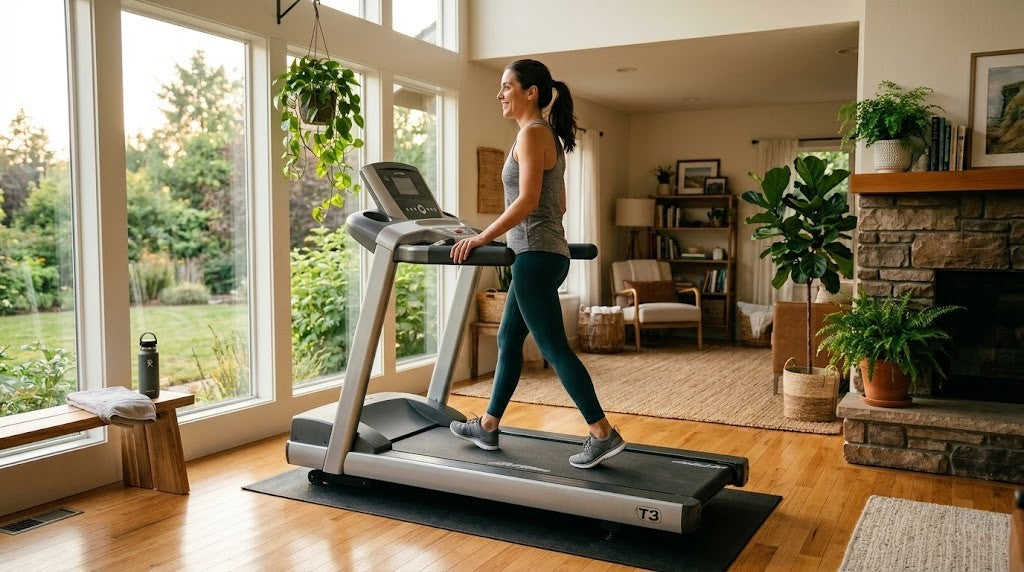
Most people know their HSA or FSA card covers prescriptions, copays, and medical visits. What far fewer people realize is that fitness equipment can qualify too - and that means you could be buying a treadmill, recumbent bike, or elliptical with pre-tax dollars.
At The Fitness Outlet, we want to make sure our customers get the most out of every dollar they spend on their health. If you have an HSA or FSA and you've been putting off a fitness equipment purchase, this guide is for you.
What Are HSA and FSA Accounts?
Before we get into fitness equipment, a quick recap on how these accounts work.
A Health Savings Account (HSA) is a tax-advantaged account available to people enrolled in a high-deductible health plan. You contribute pre-tax dollars, the money grows tax-free, and withdrawals for qualified medical expenses are also tax-free. One of the biggest advantages of an HSA is that unused funds roll over year to year - there's no deadline to spend them.
A Flexible Spending Account (FSA) is an employer-sponsored benefit that lets you set aside pre-tax income for eligible health expenses. The key difference from an HSA is that FSA funds typically operate on a use-it-or-lose-it basis - most plans require you to spend the balance by the end of the plan year, though some offer a short grace period or allow a small rollover.
Both accounts are designed to make healthcare more affordable. And since regular exercise is one of the most effective forms of preventive care, the IRS allows certain fitness equipment purchases to qualify - with the right documentation.
Can You Really Use HSA/FSA Funds for Fitness Equipment?
Yes - but there's an important condition. Fitness equipment is classified by the IRS as a "dual-purpose" item, meaning it can be used for both general wellness and medical treatment. Because of this, you generally need a Letter of Medical Necessity (LMN) from a licensed healthcare provider to use your HSA or FSA funds for exercise equipment.
Without an LMN, fitness equipment is typically considered a general wellness expense and won't qualify. With one, the same piece of equipment becomes a legitimate medical expense under IRS Publication 502.
This matters more than most people realize. The IRS doesn't maintain a fixed list of every eligible product because medical circumstances vary so widely between individuals. Instead, the LMN process exists to establish that a specific purchase is medically appropriate for your specific condition. That means the same treadmill that wouldn't qualify for one person could be fully reimbursable for another - it all depends on your health situation and the documentation behind it.
The financial benefit is significant. Depending on your tax bracket, using pre-tax HSA or FSA funds can save you 20-35% compared to paying out of pocket. On a $1,500 elliptical, that's potentially $300-$500 back in your pocket.

What Is a Letter of Medical Necessity?
A Letter of Medical Necessity is a written statement from your doctor, physical therapist, or other licensed healthcare provider confirming that a specific piece of equipment is medically required to treat, manage, or prevent a diagnosed condition.
To be effective, a good LMN should include:
- Your diagnosed medical condition (e.g. osteoarthritis, cardiovascular disease, obesity, post-surgical rehabilitation)
- The specific equipment being recommended
- An explanation of why the equipment is necessary for your treatment
- A statement that less expensive alternatives are not adequate for your medical needs
- The provider's signature and credentials
Conditions that commonly qualify include heart disease, hypertension, Type 2 diabetes, obesity, arthritis, knee or hip injuries, and post-surgery rehabilitation. If your doctor has ever recommended exercise as part of your treatment plan, there's a good chance you can get an LMN.
Once you have your LMN, keep a copy along with your receipt and any order confirmation. Your HSA or FSA administrator may ask for these documents when you submit for reimbursement.
What Types of Fitness Equipment May Qualify?
With a valid LMN, a wide range of fitness equipment can qualify. Common categories include:
Treadmills - Often prescribed for cardiovascular health, weight management, or rehabilitation. One of the most commonly approved categories.
Recumbent Bikes - Widely used in physical therapy and cardiac rehab. The low-impact, joint-friendly design makes these a strong candidate for medical approval.
Ellipticals - Recommended by physicians for patients who need consistent cardio without joint stress. Frequently approved for knee, hip, and cardiovascular conditions.
Rowers - Full-body, low-impact cardio often recommended for rehabilitation and cardiovascular health.
Recovery Tools - Percussive massagers, foam rollers, and mobility equipment used for muscle therapy and recovery can qualify as FSA-eligible purchases with appropriate documentation.
It's also worth knowing that not all fitness equipment requires an LMN. Some recovery and therapeutic items - like certain percussive massagers and orthopedic supports - are automatically eligible without additional documentation. For larger cardio machines, though, an LMN is almost always required.
Always confirm eligibility with your HSA or FSA administrator before purchasing. Rules can vary between plans, and your administrator has the final say on what qualifies.
Equipment at The Fitness Outlet That May Qualify
Here are some of the products our customers most commonly purchase using HSA or FSA funds, particularly those managing medical conditions or recovering from injury:
Life Fitness T3 Treadmill - One of the most popular home treadmills we carry, and a strong candidate for HSA/FSA approval when prescribed for cardiovascular health or weight management. Life Fitness's patented FlexDeck shock absorption reduces joint impact by up to 30% compared to outdoor running - a detail worth including in your LMN request.
True Fitness Z500 Treadmill - A compact, commercial-grade treadmill built for serious daily use. The TRUE FITX Impact System softens impact at the front and firms up at the rear for a natural, joint-friendly stride - particularly relevant for patients managing cardiovascular conditions or recovering from lower body injuries.
WaterRower Rowing Machine - Rowers are increasingly prescribed for full-body, low-impact cardiovascular rehab. The WaterRower's patented water resistance mimics the natural feel of rowing on open water, making it smooth, quiet, and easy on the joints. Handcrafted in the USA from sustainably sourced hardwood.
Keiser M5i Strider Elliptical - Originally designed for indoor walking programs in clinical settings, the M5i is one of the most joint-friendly cardio machines available. Its shorter stride promotes a natural walking pattern with minimal knee stress, and the commercial-grade magnetic resistance system is virtually maintenance-free. A strong option for patients managing arthritis, cardiac conditions, or post-surgical recovery.
All purchases from The Fitness Outlet come with itemized receipts, making the reimbursement process straightforward.
How to Shop HSA/FSA Eligible Equipment at The Fitness Outlet
Getting the most out of your benefits is simple. Here's the process:
Step 1 - Talk to your doctor. If you have a diagnosed condition and exercise has been recommended as part of your treatment, ask your doctor or physical therapist for a Letter of Medical Necessity. Be specific about the type of equipment you're considering - mentioning the brand or model can help your provider write a more targeted letter.
Step 2 - Check with your plan administrator. Contact your HSA or FSA administrator to confirm what documentation they require and which equipment categories are covered under your specific plan. Some plans have a straightforward online submission process; others may require a phone call. Getting clarity upfront saves time later.
Step 3 - Shop at The Fitness Outlet. Browse our full range of treadmills, ellipticals, recumbent bikes, and recovery tools. Our team can help you identify products that are commonly approved for medical use and answer questions about specifications that may be relevant to your condition.
Step 4 - Pay and save your receipt. You can pay directly with your HSA or FSA debit card at checkout, or pay out of pocket and submit for reimbursement. We provide itemized receipts for every purchase to meet IRS documentation requirements.
Step 5 - Submit for reimbursement if needed. Attach your LMN, itemized receipt, and any required forms to your reimbursement claim. Keep copies of everything for your records. Your administrator typically processes claims within a few business days.
A Note on FSA Year-End Deadlines
If you have an FSA, pay close attention to your plan's deadline. Most FSA funds expire at the end of your plan year - typically December 31 - though some employers offer a grace period of up to 2.5 months or allow a small rollover amount (up to $660 in 2025). If you're approaching a deadline with unspent FSA funds, fitness equipment is one of the better ways to put those dollars to good use before they disappear.
The key is to plan ahead. Getting an LMN, confirming eligibility with your administrator, and placing your order all take time. If you wait until the last week of December, you may run out of time. Starting the process in October or November gives you plenty of room to get everything in order.
HSA funds, by contrast, roll over indefinitely with no expiration - so there's no urgency, but there's also no reason to leave tax-advantaged dollars sitting unused when you could be investing them in equipment that supports your long-term health.
Have questions about HSA/FSA eligible equipment? Our team has been helping customers make smart fitness investments since 1993. Contact us or visit one of our showrooms.
Share:
What to Do When Your Cardio Machine Stops Working Properly
Elliptical vs. Bike: Which is Best for Your Fitness Goals?