


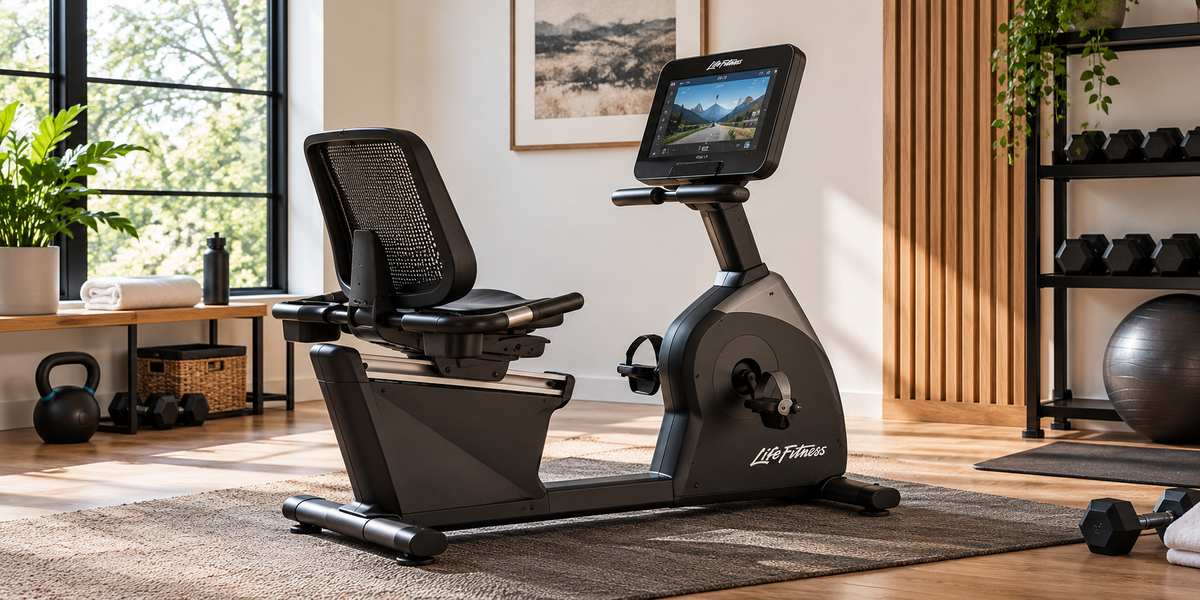
How do you choose the right recumbent exercise bike?
Start with seat comfort, pedal reach, back support and easy entry and exit. Once the bike fits comfortably, compare console readability, resistance controls, footprint and manufacturer warranty. Try several minutes of pedaling whenever possible.
A recumbent exercise bike can make home cardio feel more comfortable and approachable, especially if you prefer a supportive seated position. But two recumbent bikes that look similar can feel surprisingly different once you sit down and start pedaling.
The best choice is not automatically the largest touchscreen or highest-priced model. Begin with how the bike fits your body, then compare the features that make everyday use easier.
1. Start with seat comfort and adjustment
Recumbent bikes use a larger seat and backrest than upright bikes, but cushion firmness, seat width and backrest shape vary. Try each seat for several minutes; a comfortable first impression does not always predict how it feels during a complete workout.
Check whether the seat moves forward and backward in manageable increments. If more than one household member will ride, have each person adjust the seat independently. A reclining backrest is an additional preference, not a substitute for the correct pedal distance.
2. Find the right pedal reach
While seated with your back against the backrest, move one pedal to the farthest point in its rotation. Your knee should remain slightly bent without requiring you to point your toes, slide forward or lift your hips. Repeat on both sides and pedal for a few minutes.
If the bike feels cramped, move the seat back slightly. If you stretch or lose back support, move it closer. Pay attention to whether the pedals and straps hold your shoes comfortably, and test at both low and moderate resistance.

3. Judge the back support during movement
Some recumbent bikes use padded, contoured backrests while others use mesh or vented designs. Neither is universally better. Sit in your normal riding posture and check lower-back support, shoulder comfort and how naturally your hands rest on the side handles.
Try pedaling without leaning toward the console. If you need to sit forward to see the screen or control resistance, the overall setup may be less comfortable for longer sessions.
4. Test entry and exit
Many models offer step-through frames, but the size and placement of the opening vary. Try stepping through, sitting, standing and stepping away several times. Check the seat height, clearance around the frame and whether accessible handholds feel secure.
A step-through design can be convenient, but it is not a guarantee of accessibility for every individual. Test the exact machine and consult the manufacturer for its intended use and safety guidance.
5. Choose a readable, practical console
For basic cardio, clear displays for time, distance, resistance and heart-rate information may be more valuable than a complicated touchscreen. Shoppers who enjoy guided workouts or entertainment may prefer connected console options.
Sit at your normal riding angle and assess glare, text size, button placement and the number of steps needed to begin a workout. Check whether a console option requires mains power and whether connectivity features vary by configuration.
6. Measure your space and delivery route
Recumbent bikes often have longer footprints than upright bikes because the pedals sit ahead of the seat. Measure the entire area, allowing comfortable room for entry, exit, seat adjustments, cleaning and nearby furniture. Verify assembled length, width, height and required electrical access on the specific manufacturer's specification sheet.
Check doors, turns, stairs and the installation route before delivery. Product measurements and carton dimensions are not interchangeable.
Four recumbent bikes to compare at The Fitness Outlet
These four active TFO products offer useful comparison points for shoppers prioritizing seat adjustment, straightforward controls or commercial-oriented construction. Confirm exact console and warranty configurations on each product listing before purchasing.

Spirit Fitness XBR55 Recumbent Bike
Compare if: You want an adjustable residential bike with a reclining backrest.
View Spirit Fitness XBR55 Recumbent Bike →
TRUE Fitness Gravity Recumbent Bike
Compare if: You want a premium fit experience with multiple console choices.
View TRUE Fitness Gravity Recumbent Bike →
Spirit Fitness CR800 Recumbent Bike
Compare if: You favor straightforward workouts and a commercial-oriented design.
View Spirit Fitness CR800 Recumbent Bike →
Star Trac 8 Series Recumbent Bike
Compare if: You want to compare a premium commercial-style seat and display.
View Star Trac 8 Series Recumbent Bike →Your practical showroom checklist
Seat fit: Adjust the seat yourself, then pedal with a slight knee bend at full reach. Back support: Check comfort after several minutes, not just the first few seconds. Entry: Step through and exit the machine a few times. Pedals: Test foot placement, straps and resistance transitions. Console: Read the display and change resistance without sitting forward. Stability: Listen and feel for unwanted movement. Room fit: Confirm machine dimensions, door clearance and power needs.
Compare at least two bikes back-to-back when possible. Even closely priced models can feel different because of seat geometry, frame design and how each person sits.
Warranty and long-term ownership
Before deciding, read the specific manufacturer's current warranty for the exact model and use setting. Frame, parts, electronics and labor coverage may have separate terms, and residential versus commercial use can change eligibility. Also ask about cleaning, service access and who to contact for warranty support.
Bottom line
The best recumbent exercise bike is the one that fits comfortably and makes regular use easy. Prioritize seat adjustment, pedal reach, back support and entry design; then evaluate displays, footprint and warranty. If possible, test your final candidates side by side before purchasing.

Share:
Seated vs. Standing Ellipticals Cross Trainers: How to Compare Comfort and Fit