

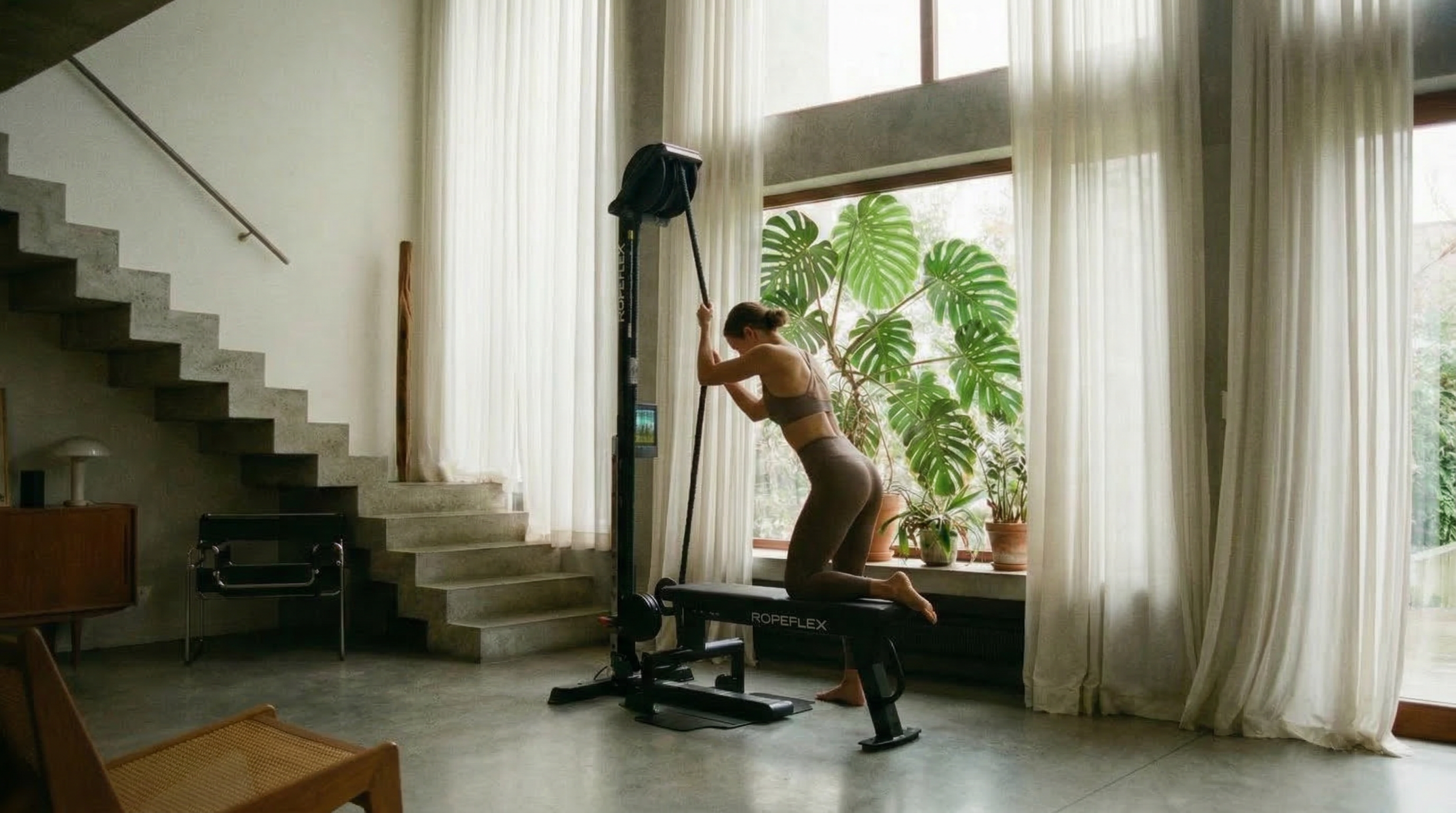
Rope training is one of those timeless movements that has stood the test of time - from ships and military drills to today's high-performance gyms. What's changed is how we do it. Instead of climbing ropes or hauling them outdoors, we now have the rope pulling machine - a modern take on a classic exercise that blends cardio, strength, and endurance training into one powerful workout.
Whether you're curious about the benefits of a rope pulling machine, exploring workouts for your gym routine, or wondering if a home rope pull machine can deliver real results, this guide covers everything you need to know.
What Is a Rope Pulling Machine?
At its core, a rope pulling machine uses an endless loop of rope fed through a drum mechanism to provide continuous, resistance-based pulling exercise. Unlike a fixed cable or weight stack, the rope keeps moving as you pull - which means you train for time or distance rather than reps, making it uniquely suited to both cardio conditioning and strength work.
Most modern machines use Progressive Resistance technology, which automatically adjusts resistance based on your pulling speed and effort. Pull harder and the resistance increases to match. Ease off, and it backs down. This self-regulating system makes rope pulling machines genuinely effective for beginners, competitive athletes, and everyone in between - without ever needing to configure settings or change weights.
Most models also offer multiple pulley positions, allowing vertical, horizontal, and diagonal pulls so you can target different muscle groups and movement patterns from a single piece of equipment.

Muscles Worked
One of the biggest advantages of rope pulling is how many muscles it engages at once:
Upper body: The lats do the majority of the pulling work. The traps and rear deltoids assist with stability and control, while the biceps and forearms work constantly to grip and move the rope.
Core: Every pull requires your abs, obliques, and lower back to stabilize your spine and prevent twisting. This continuous core engagement is one of the reasons rope pulling transfers so well to real-world movements.
Lower body: In standing or incline positions, your glutes, quads, and hamstrings activate to support and drive the movement. Models with sliding seats or tread systems engage the legs even more directly.
Grip: Rope pulling is one of the most grip-intensive training methods available. Your hands, wrists, and forearms are under near-constant tension throughout every session.
Key Benefits of Rope Pulling Machines
Full-body strength in one movement. Most exercises isolate one or two muscle groups. Rope pulling engages your back, shoulders, arms, core, and legs simultaneously - making it one of the most time-efficient strength tools available.
Cardio and strength combined. Rather than separate cardio and weights sessions, a rope pulling workout delivers both at once. High-intensity rope pulling burns 200-300 calories in 20 minutes while simultaneously building muscular endurance.
Low impact on joints. Unlike running, the smooth pulling motion puts minimal stress on your knees, hips, and ankles - making it an excellent option for people with joint sensitivity or those training around injury.
Exceptional grip development. Few training methods challenge grip as consistently. Your forearms and hands are under near-constant tension throughout every session - a benefit that carries over to almost every other form of exercise and daily activity.
Functional, real-world strength. Rope pulling trains natural pulling patterns that directly mirror real-world movements - dragging, hauling, climbing, carrying. This kind of strength improves daily tasks and physical activities in ways isolated machine training often doesn't.
Scalable for all fitness levels. Progressive Resistance means the same machine works for rehabilitation, general fitness, and high-performance training. There's no upper ceiling and no lower floor.
Accessible for a wide range of users. Most Ropeflex machines feature ADA-compliant removable seats, making them accessible for seated training and wheelchair users - one of the few high-intensity options available to people who can't bear weight through their legs.
Exercises and Workouts
Core Exercises
Seated hand-over-hand pulls - The most beginner-friendly starting point. Sit facing the machine, feet flat, core engaged. Pull in smooth alternating strokes, keeping your back upright. Focus on controlled movement and a strong squeeze of the shoulder blades at the end of each pull. Start with 3-4 sets of 40-50 pulls at low resistance.
Standing hand-over-hand pulls - From an athletic stance with feet staggered for balance, pull toward you in powerful alternating strokes. Keep your core braced and the rope at roughly shoulder height. Increase pace to raise heart rate or increase resistance to focus on strength. Build to 4 sets of 45-60 seconds.
One-arm pulls - Alternating single-arm pulls build unilateral strength and grip endurance while adding rotational challenge to the core.
Incline rope pulls - Position yourself leaning into the rope with knees bent to absorb the effort. The angle simulates vertical climbing, engaging legs and posterior chain alongside upper body pulling.
Squat-to-pull combos - Combine a bodyweight squat with each pull stroke for full-body conditioning in one fluid movement.
Plank pulls - From a plank position, pull the rope with alternating arms. A serious challenge for core stability and upper body endurance.
Sample Workouts
Cardio intervals: 30 seconds all-out pulling, 30 seconds rest. Repeat 8-10 rounds. Progressive Resistance handles the intensity automatically - just pull as hard as you can during work periods.
Endurance session: Continuous moderate-resistance pulling for 5-10 minutes. Focus on smooth form and consistent rhythm rather than speed.
Strength session: High resistance, short bursts of 10-15 pulls with 60-90 seconds rest between sets. 4-5 sets total.
Advanced HIIT: Combine rope pulls with lower-body exercises - 30 seconds rope pulls, 10 squats, 30 seconds rope pulls, 10 lunges. Repeat for 20 minutes.
How Often Should You Train?
For strength and endurance: 2-3 sessions per week, with at least one rest day between to allow grip and upper back recovery.
For cardio conditioning: 3-4 shorter, higher-intensity sessions per week.
For rehabilitation: 2 sessions per week at moderate resistance. Always follow guidance from your physical therapist.
Start conservatively and build gradually. Rope pulling is demanding on the grip and upper back - give those structures time to adapt before increasing resistance or session length.
Safety and Maintenance
Safety tips:
- Keep your spine neutral and core engaged throughout
- Start with lower resistance to master form before going heavier
- Pull smoothly - avoid jerky or overly fast motions
- Clear the area around the machine to prevent tripping hazards
- Always attach the safety strap if your model has one
Maintenance tips:
- Wipe down the rope after each session to reduce sweat buildup
- Check regularly for fraying and replace rope before it wears through
- Lubricate moving parts or check tension systems as directed by the manufacturer
- Inspect resistance settings periodically for smooth operation
Common issues:
- Rope slipping? Usually fixed by tightening the drum or adjusting resistance settings
- Resistance not engaging? Inspect the tension system or magnetic components
- Uneven rope wear? Rotate or replace as needed to maintain smooth pulls
Best Rope Pulling Machines at The Fitness Outlet
Ropeflex OX2 RX2100 - Best for Home Gyms and Tight Spaces
Mounts directly to existing beams, racks, or walls - no floor space required. Compact, space-saving, and budget-conscious without sacrificing performance. A great starting point for home gym users who already have a rack or rig to mount it to.
Ropeflex WOLF RX2200 - Best for Versatile Home or Studio Training
Freestanding horizontal rope trainer with Progressive Resistance from 10 to 200 lbs. No wall or ceiling mount needed. Extended cushioned seat, ADA-compliant design, and favored by MMA fighters and combat athletes for grip strength and pulling power development. Highly portable.
Ropeflex ORYX RX2500 - Best All-Around
The most popular model in the RopeFlex range. Progressive Resistance from 10 to 200 lbs, 8-position adjustable pulley for vertical, horizontal, and diagonal pulls, ADA-compliant removable seat, LCD console, and built-in transport wheels. Suitable for home gyms and commercial facilities alike.
Ropeflex ADDAX RX3200 - Best for Full-Body Training
Adds a sliding seat system for rowing-style workouts that blend upper and lower body movement. 10 fixed seat positions for isolated arm work, free-sliding for full-body pulls, or removable for standing exercises. Resistance scales from 15 to 275 lbs. Folds upright for storage.
Ropeflex APEX RX4400 - Best for Maximum Conditioning
Combines rope pulling with an incline tread system for the most comprehensive full-body workout in the range. The tread engages legs and posterior chain while the rope works upper body and core simultaneously. Built for commercial facilities and serious home training spaces.
| Model | Best For | Resistance | Key Feature |
|---|---|---|---|
| OX2 RX2100 | Home gyms, tight spaces | Adjustable | Wall/beam mount, compact |
| WOLF RX2200 | Versatile home or studio | 10-200 lbs | Freestanding, no mount needed |
| ORYX RX2500 | All-around commercial and home | 10-200 lbs | 8 pull positions, ADA seat |
| ADDAX RX3200 | Full-body conditioning | 15-275 lbs | Sliding seat, rowing-style |
| APEX RX4400 | Maximum conditioning | Up to 200 lbs | Rope + incline tread combo |
Who Should Try Rope Pulling?
Rope pulling machines work for a remarkably wide range of people - athletes building functional strength, people with knee or hip issues needing joint-friendly cardio, rehabilitation patients working through upper body recovery, wheelchair users needing an effective upper-body conditioning option, and anyone short on time who wants strength and cardio in a single session.
Have questions about which rope pulling machine is right for your space? Our team has been helping customers find the right equipment since 1993. Contact us or visit one of our showrooms.

Share:
The Complete Guide to Smith Machines and Everything You Need to Know
How to Choose, Use, and Maximize Results with a Weight Bench