


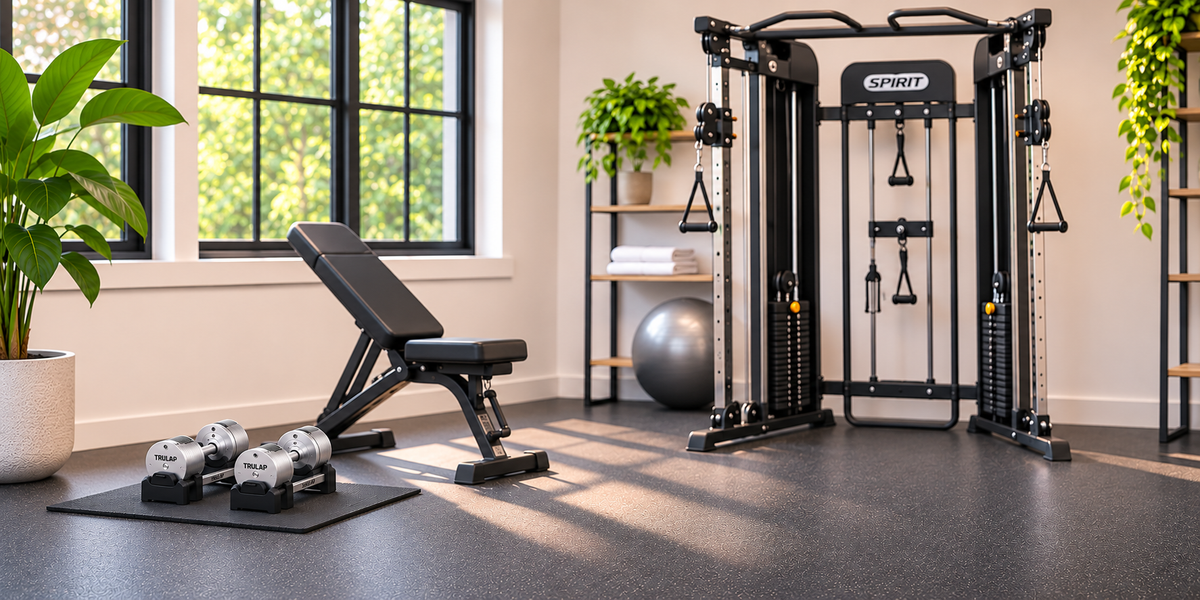
Adjustable dumbbells or a functional trainer?
For a flexible first strength purchase in a smaller space, adjustable dumbbells are often the practical choice. A functional trainer makes more sense if cable exercises, adjustable pulling angles, and a dedicated strength station are priorities. The better investment is the one that supports your favorite movements, fits your room, and will be used consistently.
If you are building a home gym, two popular options can look surprisingly different: a compact pair of adjustable dumbbells or a full cable-based functional trainer. Both can support a broad range of strength exercises, but their space needs, training feel, and long-term costs are not interchangeable.
Adjustable dumbbells vs. functional trainer: at a glance
| Factor | Adjustable dumbbells | Functional trainer |
|---|---|---|
| Best fit | Free-weight training and flexible storage | Cable-focused training in a dedicated station |
| Space | Small storage footprint; open exercise area still needed | Larger permanent footprint and movement clearance |
| Resistance | Selectable fixed loads per dumbbell | Cable and weight-stack resistance; pulley ratio matters |
| Typical add-ons | Bench, mat, stand | Handles, attachments, potentially a bench |
| Moving or relocating | Generally easier | Usually more involved |
Why this comparison matters
Adjustable dumbbells and functional trainers both support strength training, but they solve different problems. Dumbbells put the load in your hands and allow you to move freely. Functional trainers guide resistance through cables and adjustable pulleys. Choosing between them is less about which is universally better and more about the movements you enjoy, the space you have, and how you expect to progress.
When adjustable dumbbells are the better first purchase
Start with adjustable dumbbells if you want a flexible, relatively compact way to perform presses, rows, lunges, carries, and other free-weight movements. They can be paired with a bench later and are easy to move or store compared with a full cable station. They are especially appealing when you want to begin strength training without committing a large area of your home to one machine. However, weight changes, handle feel, increments, and the maximum load differ by model. Some exercises also need a bench or additional accessories.
When a functional trainer is worth the investment
A functional trainer may be the better fit if you value cable resistance, adjustable pulling angles, standing exercises, and repeatable setup positions. Many people enjoy cable rows, presses, fly movements, and rotational exercises without having to lift and position dumbbells. It is a more substantial equipment commitment: measure the machine, surrounding working area, ceiling clearance, delivery route, and any accessory storage before buying. Check the manufacturer's resistance ratio and usable resistance rather than comparing weight-stack numbers directly with dumbbell weights.
Space and setup: the hidden tradeoff
Adjustable dumbbells usually take less dedicated floor space, but you still need an open exercise area to move safely, and a bench can increase the footprint. A functional trainer occupies a more permanent location and requires room for your arms, attachments, and the direction of each movement. For either option, plan around the workout you will actually perform, not simply the dimensions shown on a product listing.
Versatility and training feel
Dumbbells make it straightforward to train unilateral movements, carries, and free-weight patterns. Cables provide continuous line-of-pull resistance through a pulley path, which can be useful for different exercise angles. Neither format automatically replaces every strength exercise. Your choice should reflect whether you prefer free weights, cables, or a mix, and whether you can perform your intended movements with good technique.
How to compare the investment
Instead of treating purchase price as the only cost, include the accessories you need, available floor space, installation or assembly, and whether you will actually use the equipment several times a week. A bench and dumbbells may be an effective first setup; a functional trainer can make sense as a longer-term centerpiece. If you already own one, the other can complement it rather than duplicate it.
PowerBlock vs. Trulap: what to evaluate
Both brands offer adjustable dumbbell options currently listed by TFO. Compare the specific weight range, increments, changing mechanism, handle feel, footprint, and available expansion or accessory options for the exact model. The PowerBlock Pro 50 and Trulap 8552 G4 provide useful starting points, but try the adjustment process and verify current manufacturer details before choosing.
Two functional trainers to compare
The Spirit Fitness CSF-FUNT and Life Fitness G7 Gym are active TFO listings. Evaluate their cable travel, pulley positioning, resistance characteristics, accessories, installation needs, and suitability for your home. These are different machines, so do not assume they offer identical movement options or resistance.
Which should you buy first?
Choose adjustable dumbbells first when compact storage, free-weight exercises, and a smaller initial commitment matter most. Choose a functional trainer first when cable exercises are central to your routine and you have a dedicated space and budget. If you are unsure, list your five most important exercises, check which equipment supports each one, and try both formats before purchasing. A combination may be worthwhile later if your goals and space justify it.
Four TFO strength options to compare
These are currently ACTIVE Shopify products. Use the cards to explore each model, then confirm the latest specifications, accessories, fit, and availability before purchasing.

PowerBlock Pro 50 Set Dumbbell (5-50lbs)
Compare if: You want a compact free-weight starting point with selectable resistance.

Trulap 8552 G4 Dumbbells
Compare if: You want to compare another adjustable dumbbell design and its weight-change experience.

Spirit Fitness CSF-FUNT Functional Trainer
Compare if: You want a dedicated cable station for varied pulling and pressing angles.

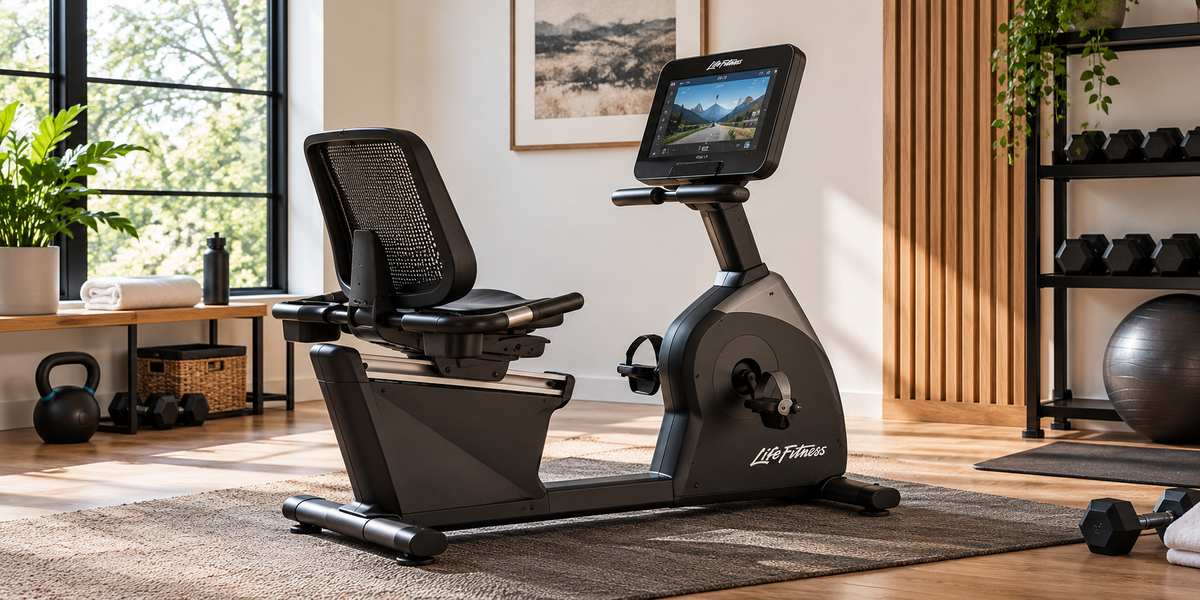
Life Fitness G7 Gym
Compare if: You are comparing a home-oriented cable gym and its available accessories.
Before you decide: a five-question checklist
- Which five exercises do you want to perform most often?
- How much clear workout space do you have, including movement and access?
- Do you prefer the feel of free weights or cable resistance?
- Will more than one person use the equipment, and how easily can each person adjust it?
- What accessories, delivery, assembly, and future upgrades belong in your total budget?
For a closer look at dumbbell models, read our PowerBlock adjustable dumbbell comparison. If you're evaluating machine categories, see Functional Trainer vs. Home Gym.

Share: