Description

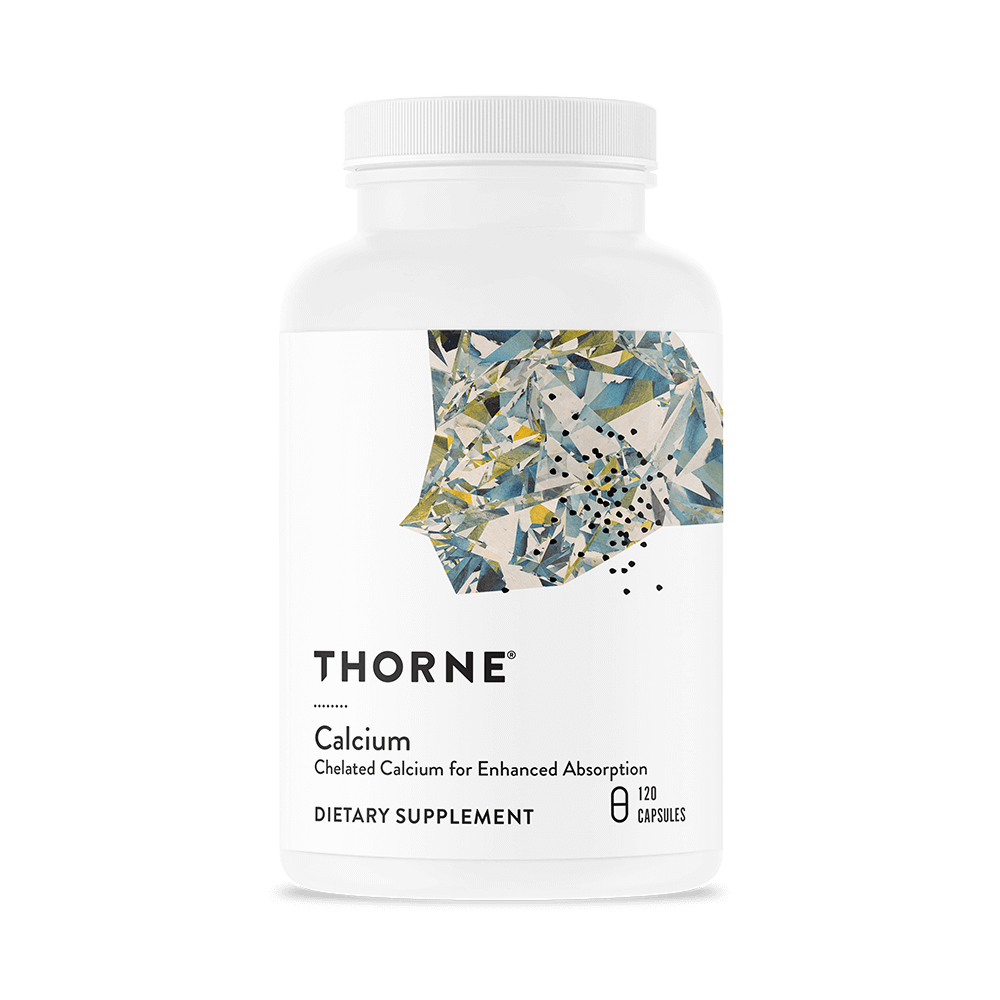
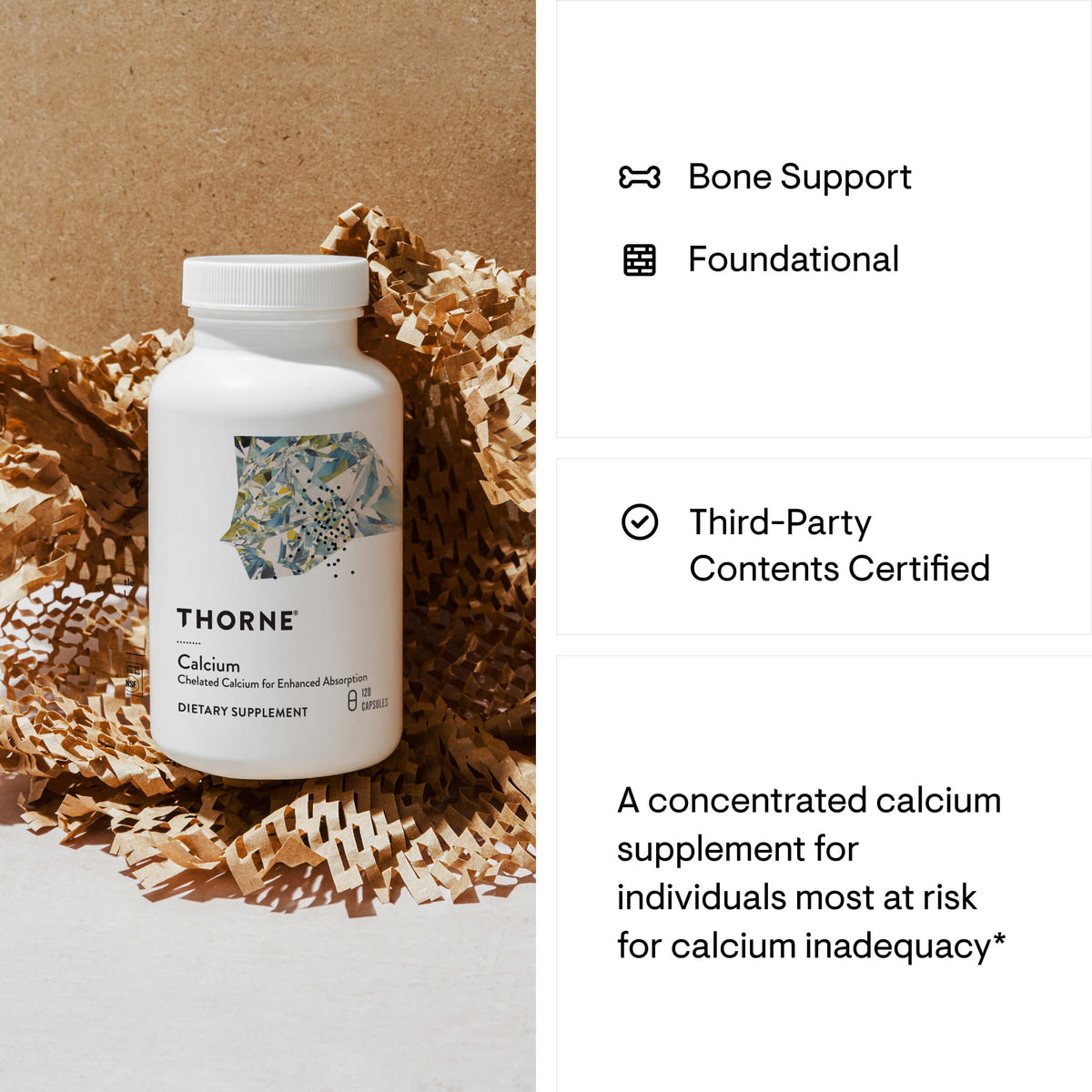
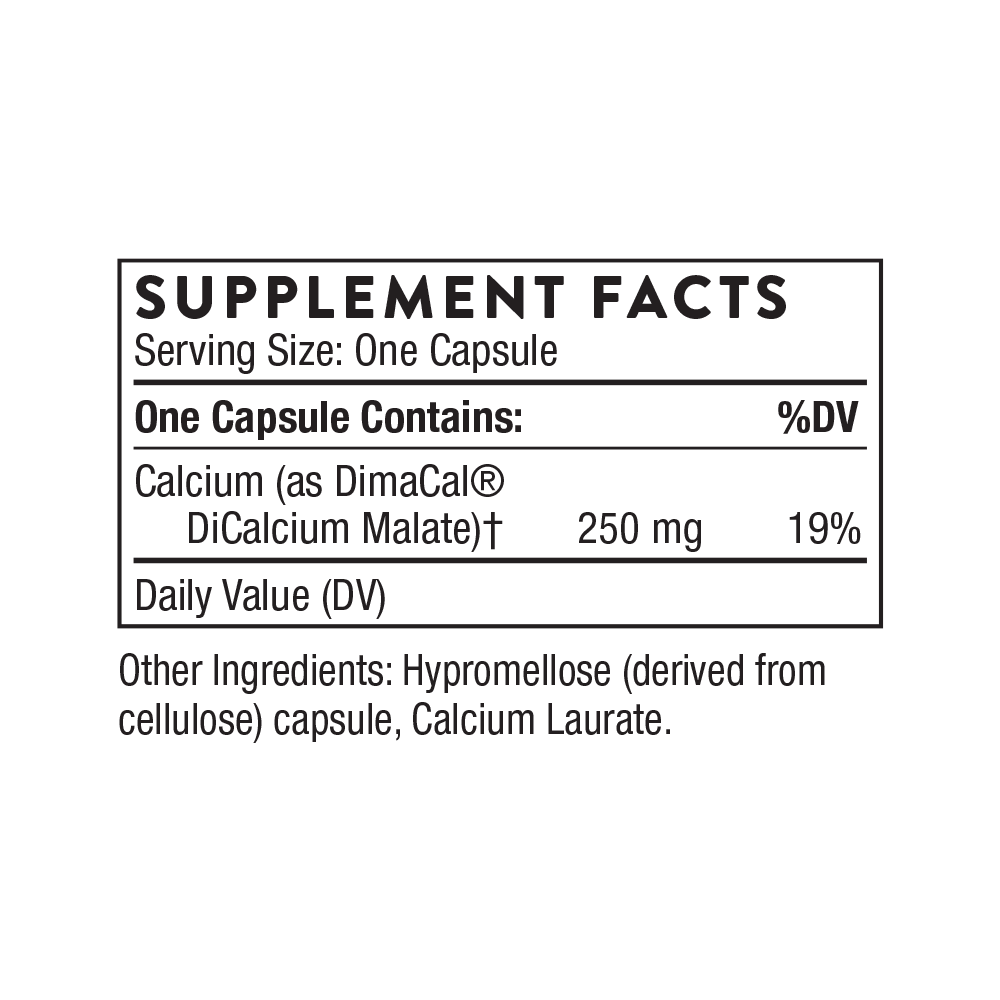
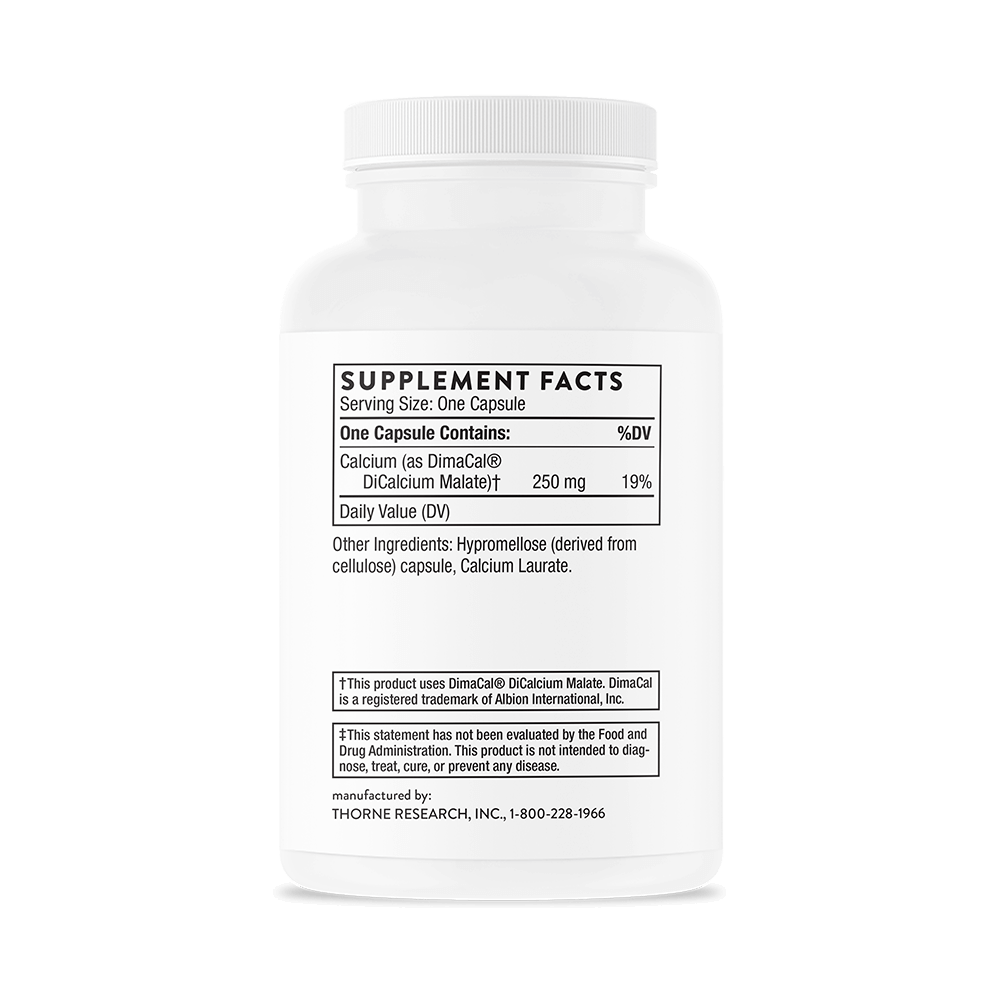
Research indicates that a large proportion of the U.S. adult population does not consume the 1,300 mg of calcium the U.S. Food and Drug Administration recommends for daily dietary intake. Individuals who are at the most risk for calcium inadequacy because of decreased intake, disordered metabolism, decreased absorption, increased loss, or increased need include peri- and postmenopausal women, vegans, individuals who take certain prescription and OTC medications, and those with a vitamin D deficiency (because vitamin D is necessary for calcium absorption).* Thorne's Calcium, as DiCalcium Malate, with 250 mg per capsule, is more concentrated than other forms of calcium (such as calcium carbonate), and is absorbed significantly better than calcium carbonate.*

Calcium consists of one molecule of malic acid that is bound to two molecules of calcium, which results in a compound that is 29-percent calcium – compared to calcium citrate, which is 19-percent calcium – thus resulting in more elemental calcium per capsule.


Those individuals most at risk for inadequate calcium intake are:

  • Peri-menopausal and post-menopausal women
  • Women with irregular menstruation, particularly women in which this is due to prolonged athletic activity or strenuous military service
  • Individuals on a dairy-free diet
  • Vegetarians and vegans, because their diets are higher in plant-derived phytates and oxalates that inhibit calcium absorption
  • Pregnant women, particularly women with a history of gestational hypertension
  • Individuals on prescription and OTC medications such as antacids (H2 blockers or proton pump inhibitors) that can inhibit absorption, or glucocorticoids such as prednisone that can increase calcium loss
  • Individuals with a vitamin D deficiency – because vitamin D is necessary for calcium absorption


This product has been third-party tested and certified to verify what's in the package matches what's on the label and to confirm it contains no unsafe levels of contaminants, such as heavy metals, pesticides, and microorganisms.

Suggested Use:

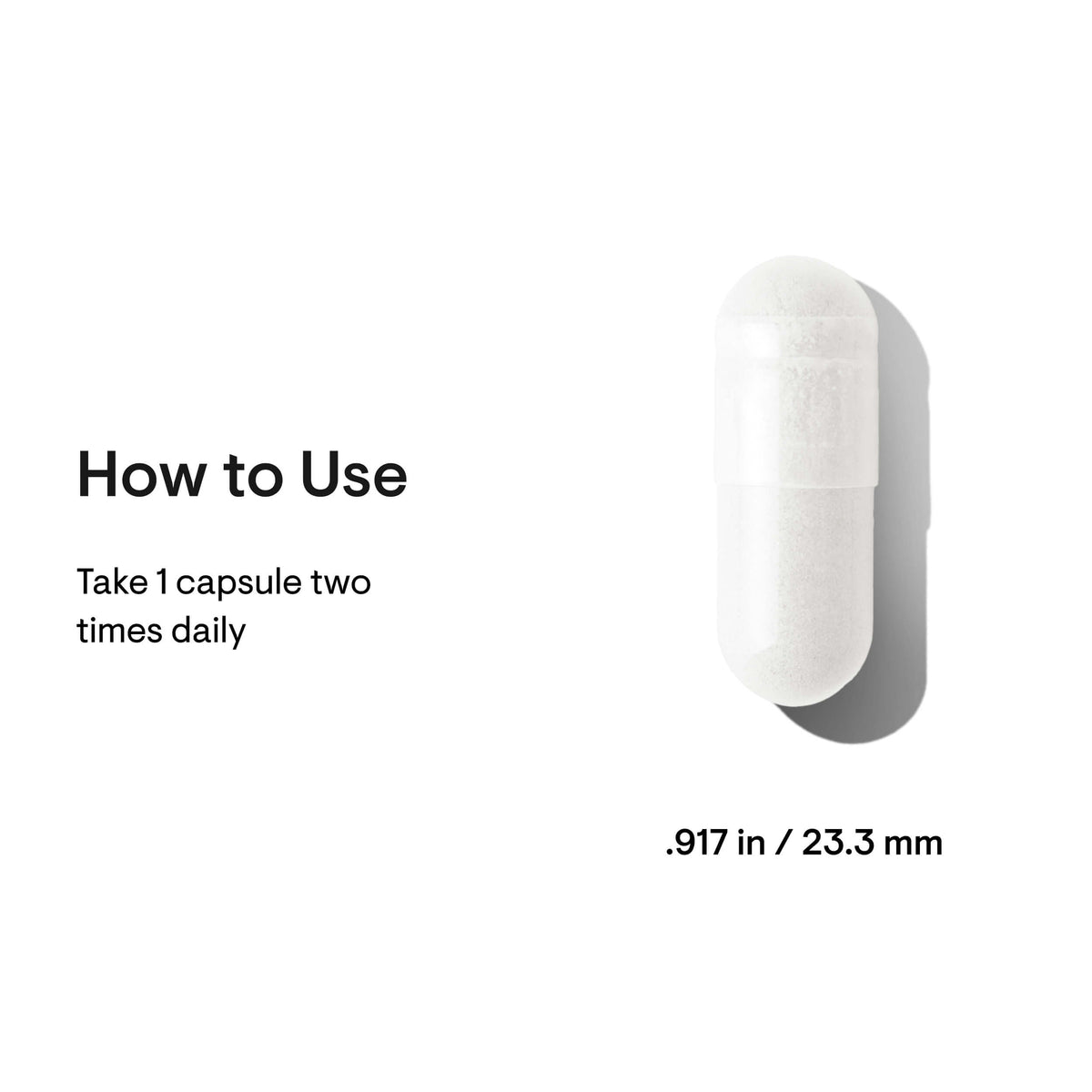
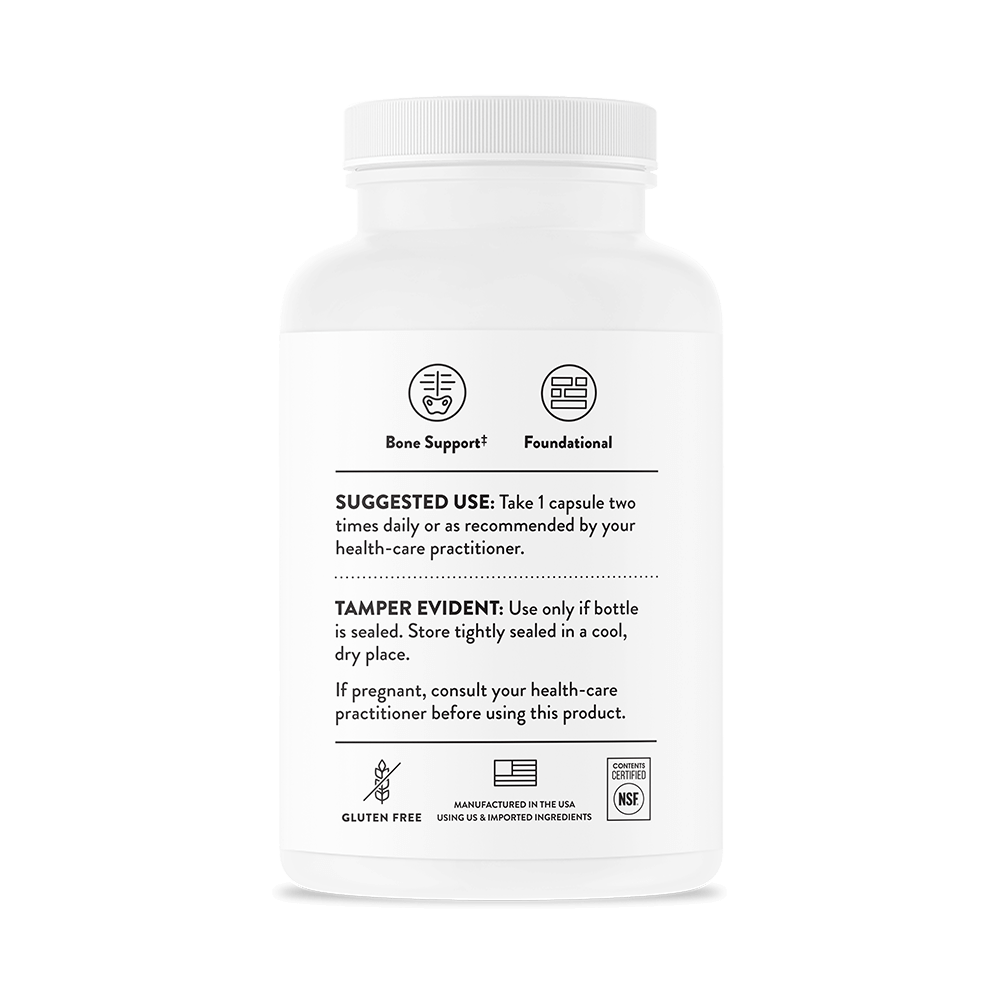
Take 1 capsule two times daily or as recommended by your health-care practitioner.

Warnings:

ALLERGY WARNING

This product is contraindicated in an individual with a history of hypersensitivity to any of its ingredients.

PREGNANCY

If pregnant, consult your health-care practitioner before using this product.

INTERACTIONS

There are no known adverse interactions or contraindications at publication date.

FAQs
Frequently asked question

Is this calcium supplement worth buying if I already eat dairy?

Even dairy consumers often fall short of the FDA's recommended 1,300 mg daily calcium intake. This supplement helps close nutritional gaps, especially if your diet is inconsistent. It's a convenient, reliable way to support bone health without overhauling your eating habits. If you're unsure about your current intake, a healthcare provider can help assess whether supplementing makes sense for you.

What is the return policy if this calcium supplement doesn't work for me?

We want you to shop with confidence. If you're not satisfied with your purchase, our return policy allows returns within the specified window noted at checkout. Individual results vary since supplements support overall nutrition over time rather than providing immediate effects. We recommend reviewing our full return policy on the site or contacting customer support for assistance with your order.

How much calcium do adults actually need per day?

The U.S. FDA recommends 1,300 mg of calcium daily for adults. Many Americans fall short of this target through diet alone. Needs can vary based on age, sex, and health status. Postmenopausal women and those with vitamin D deficiency may have increased requirements. Always consult a healthcare professional to determine the right amount for your individual needs.

Who is most at risk for calcium deficiency?

Groups at higher risk include postmenopausal and perimenopausal women, vegans, individuals with vitamin D deficiency, and those taking certain prescription or OTC medications that affect absorption or metabolism. People with digestive conditions that limit nutrient absorption are also vulnerable. If you fall into any of these categories, supplementing with calcium may be especially beneficial.

Does calcium supplementation support bone health?

Yes. Calcium is a foundational mineral for maintaining strong bones and reducing the risk of bone loss over time. Adequate intake throughout life, combined with vitamin D and regular weight-bearing activity, helps maintain bone density. Supplementing is particularly important when dietary intake is consistently below recommended levels, as the body draws calcium from bones when blood levels are low.

Can vegans benefit from taking a calcium supplement?

Absolutely. Vegans avoid dairy, which is one of the most common dietary calcium sources. While plant foods like leafy greens and fortified beverages contain calcium, reaching 1,300 mg daily through diet alone can be challenging. A calcium supplement provides a simple, consistent way for vegans to meet their daily needs and support long-term bone and joint health.

{"statementLink":"","footerHtml":"","hideMobile":false,"hideTrigger":false,"disableBgProcess":false,"language":"en","position":"left","leadColor":"#146ff8","triggerColor":"#146ff8","triggerRadius":"50%","triggerPositionX":"right","triggerPositionY":"bottom","triggerIcon":"people","triggerSize":"medium","triggerOffsetX":20,"triggerOffsetY":20,"mobile":{"triggerSize":"small","triggerPositionX":"right","triggerPositionY":"bottom","triggerOffsetX":10,"triggerOffsetY":10,"triggerRadius":"50%"}}
false