


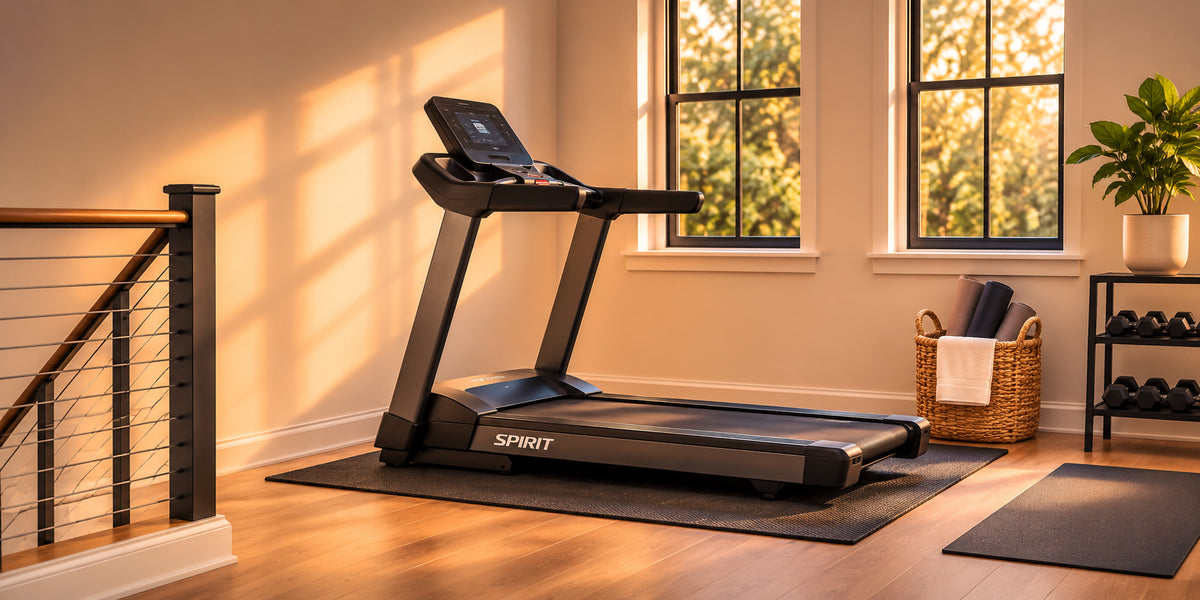
Can you put a treadmill upstairs?
Sometimes, yes but an upstairs treadmill is not automatically suitable for every home. Before buying, confirm floor suitability, noise and vibration expectations, ceiling height, delivery access, electrical requirements, and the manufacturer's operating clearances. If floor capacity is uncertain, get advice from a qualified building professional rather than guessing.
Planning a treadmill for a second-floor bedroom, home office, or spare room? The most important questions often come before you choose the console or workout programs. Will the floor accommodate the equipment and its use? How much sound will reach the room below? And can the treadmill actually make it up the stairs?
This guide walks through seven practical checks to make before ordering. It is intended to help you plan a purchase, not to certify that any particular upstairs floor is structurally suitable.
1. Confirm that the floor can support the treadmill and its users
An upstairs treadmill introduces more than the machine's shipping weight. The floor must accommodate the treadmill, the person using it, and the forces produced during exercise. A product's user weight capacity is not a rating for your home's floor. Floor construction, span, condition, placement, and local requirements all matter. Do not rely on a generic “second floors can hold X pounds” rule. If you cannot confirm suitability, particularly in an older home or a building with known floor concerns ask a qualified structural engineer or building professional before ordering. Avoid treating a treadmill mat as a structural reinforcement.
2. Expect some sound and vibration, even with a mat
The motor, belt, footfalls, and the building itself can transmit noise. Running generally creates more impact than walking, but the experience varies by treadmill, floor construction, pace, and where the room sits above other living spaces. A compatible equipment mat may help protect the floor and reduce some transmitted vibration; it cannot guarantee silence. Consider who occupies the room below, whether the space shares walls with neighbors, and what hours you plan to exercise. If possible, test the intended treadmill at the walking or running pace you will actually use.
3. Measure the ceiling with the user standing on the treadmill
Room height is easy to overlook. You need enough headroom for the treadmill deck, the tallest user's standing height, the elevation added by incline, and comfortable overhead clearance. Do not calculate from the room height alone or assume the deck stays at the same height during incline workouts. Use the manufacturer's dimensions and guidance for the exact model and intended incline range. If your room has a sloped ceiling, measure at the point where your head will be while exercising.
4. Check the entire delivery route. Not just the workout room
An upstairs room may be large enough for the finished treadmill but inaccessible to its shipping carton or main frame. Measure the front door, hallways, stair width, stair turns, landings, and the final room doorway. Check whether the treadmill can be transported in sections, and never assume a folding deck makes delivery upstairs easy. Confirm the delivery service's upstairs-carry, assembly, and removal terms before purchasing. The equipment assembled size and its shipping dimensions are different measurements.
5. Plan for operating clearance and access
Measure the machine in its in-use position, not only folded or stored. Leave the clearance required by the manufacturer behind and around the treadmill; do not place it tight against a wall to save space. Make sure there is room to step on and off safely, reach the emergency stop, and access the power connection without creating a trip hazard. A folding treadmill still needs appropriate operating space when unfolded. Our guide to folding treadmills for apartments and small homes
6. Review power, flooring, and building rules
Check the exact treadmill manual for outlet, grounding, circuit, extension-cord, and surge-protection instructions. Do not assume every treadmill has identical electrical requirements. For flooring, verify that any mat is compatible with the treadmill and the underlying floor material, especially finished wood or delicate surfaces. In a condo, apartment, or shared building, review applicable noise, delivery, and equipment rules. Even in a single-family home, consider how vibration may affect the space below.
7. Choose a treadmill for how you will actually use it
A smaller or folding model is not automatically the quietest or most suitable upstairs. Compare intended walking versus running use, running surface, deck feel, incline, operating dimensions, machine weight, and the manufacturer's setup instructions. If you are choosing between models, prioritize comfortable use and an approved installation location over choosing the lightest machine on paper. Ask about delivery and installation before treating any specific model as an upstairs recommendation.
Upstairs treadmill buying checklist
| Before you order | What to confirm |
|---|---|
| Floor | A qualified assessment if structural capacity is uncertain |
| Noise | Acceptable sound and vibration for rooms below |
| Ceiling | Headroom at your intended incline and user height |
| Delivery | Stairs, turns, doors, carton dimensions, and carry service |
| Space | Full operating footprint and manufacturer-required clearances |
| Power | Model-specific outlet and circuit instructions |
| Building rules | Applicable HOA, apartment, or condo restrictions |
Four treadmills to compare
They are not certified as suitable for upstairs installation; their inclusion is to help you compare models once your space, delivery route, and floor suitability have been checked.

Spirit Fitness XT285 Folding Treadmill
Compare if: You want to compare a folding model after checking its full operating and folded dimensions.

Spirit Fitness XT385 Folding Treadmill
Compare if: You are comparing another folding option and want to review its delivery and placement needs.

Life Fitness Atmos Treadmill – Home Edition
Compare if: You prefer a non-folding home treadmill and have confirmed enough dedicated floor space.

Life Fitness F3 Folding Treadmill
Compare if: You want another folding design to compare for your room and delivery route.
For more context on the tradeoffs between storage and a fixed setup, read Folding vs. Non-Folding Treadmills. If you are planning a multi-equipment room, our small home gym layout guide
Bottom line: check the room before choosing the treadmill
Putting a treadmill upstairs may be practical, but the answer depends on the building, the equipment, and the way it will be used. Confirm the floor and installation requirements first; then compare treadmills based on your workouts, available space, and delivery needs. When in doubt about structural capacity, consult a qualified professional before placing an order.

Share: