


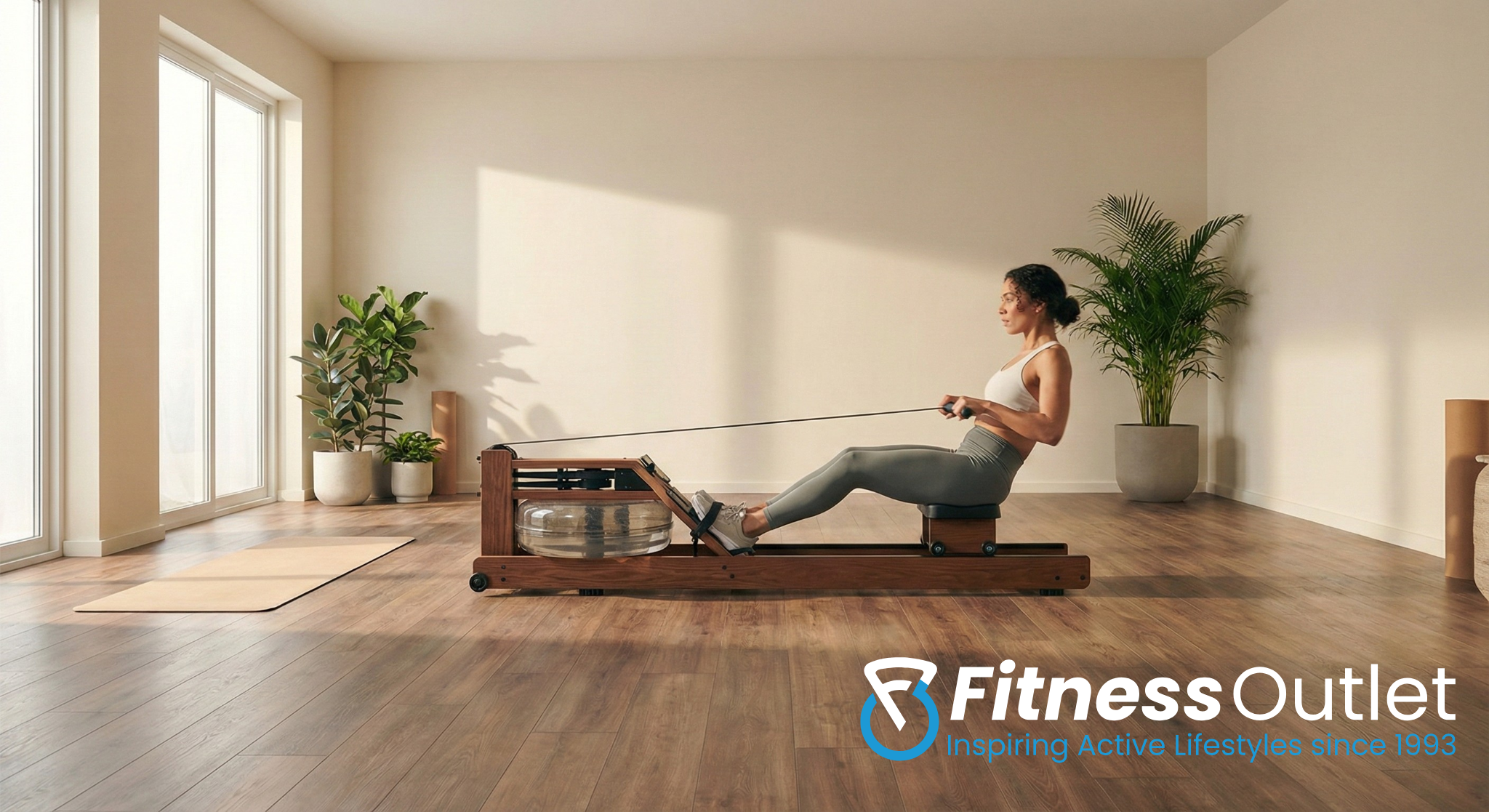
A guide to building power, posture, and stamina with every stroke
Rowing is one of those machines that people often underestimate. Many assume it is mostly an arm workout or something you do when you need a quick warmup before lifting. In reality, rowing is one of the most complete forms of training you can bring into a home gym. It supports incredible endurance, teaches proper posture, and builds real core strength while staying gentle on the joints.
At The Fitness Outlet, we hear from customers across Bellevue, Tacoma, and throughout the Pacific Northwest who want a piece of cardio equipment that supports full body conditioning without taking up too much space. A rowing machine often ends up checking every box. It blends cardio training with controlled strength work in a way that feels smooth, rhythmic, and accessible for beginners and advanced athletes.
Below you will find a complete guide to rowing for core strength and endurance, along with beginner, intermediate, and advanced workouts you can start using right away. You will also find helpful tips on form, stroke rate, and resistance, along with rower recommendations that we offer in store and online.
Why rowing is one of the best core workouts you can do
Even though the arms hold the handle, your core drives almost everything that happens on the rower. The core stabilizes the spine, transfers power between the legs and upper body, and keeps you balanced during longer sessions. When your core is engaged, rowing feels smooth and controlled. When your core relaxes too much, you instantly feel strain in your lower back and hip flexors.
Each part of the rowing stroke challenges the core in a different way. At the catch, the core helps you stay tall instead of collapsing forward. During the drive, the core keeps your torso strong as you push hard with your legs. At the finish, the core protects your lower back when you lean slightly backward. During the recovery, the core supports your posture as you slide back into position.
When all of these pieces come together, rowing becomes a continuous core workout that blends strength and endurance in a very natural way.

Proper rowing form that keeps you strong and safe
Before increasing your speed or resistance, it is worth slowing down to master the mechanics of the stroke. Good technique protects your lower back and helps your core do its job.
Start with a tall posture, relaxed shoulders, and a lightly braced core. At the catch, keep your arms extended, shins vertical, and torso hinged slightly forward from the hips. Begin the drive by pushing firmly through your legs. Your core will help you maintain alignment as your torso sweeps backward. At the finish, lean back only a small amount and pull the handle to the lower ribs. Then move into the recovery. Extend your arms first, hinge forward from the hips second, and bend your knees last.
Think of rowing as a smooth cycle. If your movement starts to feel choppy, slow down until you regain rhythm. A smooth stroke does more for your core than a fast one with sloppy technique.
How stroke rate and resistance influence your workout
The stroke rate, which is measured in strokes per minute, determines the pace of your workout.
Lower stroke rates between 18 and 24 encourage stronger leg drive and deeper core engagement. Mid range stroke rates between 24 and 30 are ideal for steady state endurance work. Higher stroke rates between 28 and 34 are used for short bursts or high intensity intervals.
Resistance is a little different depending on the type of rower. Air and water rowers respond naturally to how hard you pull. Magnetic rowers use set resistance levels. No matter the style, choose a resistance that allows you to maintain proper form for the entire duration of the workout. Higher resistance does not automatically create a better training effect. Rowing benefits most from rhythm, control, and technique.
Rowing workouts designed for core strength and endurance
These routines can be rotated throughout the week for a well rounded program.
Beginner Workout: Learning Rhythm and Position
This routine builds confidence, teaches timing, and strengthens your core without overwhelming you.
Total time: 12 to 15 minutes
-
3 minutes easy rowing at a relaxed pace
-
2 minutes moderate rowing with more focus on the drive
-
1 minute rest
-
3 minutes easy rowing
-
2 minutes moderate rowing
-
1 to 2 minutes cool down
Stay tall through the torso and focus on smooth transitions.
Intermediate Workout: Developing Core Strength and Power
This session builds deeper strength in the core and legs by alternating steady rowing with more powerful strokes.
Total time: 20 to 25 minutes
Repeat four rounds
-
2 minutes steady pace rowing
-
1 minute power strokes with a slower stroke rate and stronger drive
-
30 seconds rest
Finish with 2 minutes of easy rowing.
Advanced Workout: Interval Training for Strength and Endurance
This workout challenges your core, lungs, and mental focus. It is fast, powerful, and ideal for experienced rowers.
Total time: 25 to 30 minutes
-
5 minute warm up
Then complete six rounds -
40 seconds high intensity rowing
-
20 seconds light recovery
Finish with a 4 minute moderate row
Top rowing machines available at The Fitness Outlet
If you are building a home gym in Bellevue, Tacoma, or anywhere in the Pacific Northwest, these rowers deliver outstanding performance for both strength and endurance work.
WaterRower Natural and NOHrD Series
Quiet, smooth, beautifully designed, and powered by real water. These rowers offer one of the most natural rowing experiences available and look incredible in any home.
Spirit Fitness CRW800 Rower
Durable, comfortable, and reliable for both steady endurance sessions and high intensity intervals. This model feels very close to what you find in commercial gyms.
Body Solid Endurance R300 Rower
A strong option for interval training. Air resistance responds quickly to effort and creates excellent conditioning stimulus without costing as much as a commercial unit.
If you are not sure which rower fits your style or space, our team can help you compare features online or in person.
Rowing is one of the most versatile and effective tools for building core strength and endurance at home. It is low impact, space efficient, and adaptable for every fitness level. Whether you are training for improved posture, stronger abs, better conditioning, or simply a balanced workout routine, a rowing machine delivers everything you need in a single movement pattern.
If you are ready to bring a rower into your home gym, visit The Fitness Outlet in Bellevue or Tacoma or browse our online selection. Our team is always ready to help you choose equipment that fits your goals and supports long term progress.

Share:
Space-Saving Strength Training: The Smartest Compact Equipment for 2025
Cyber Monday Buyer’s Guide: How to Choose the Right Home Gym Equipment for Your Space in 2025