


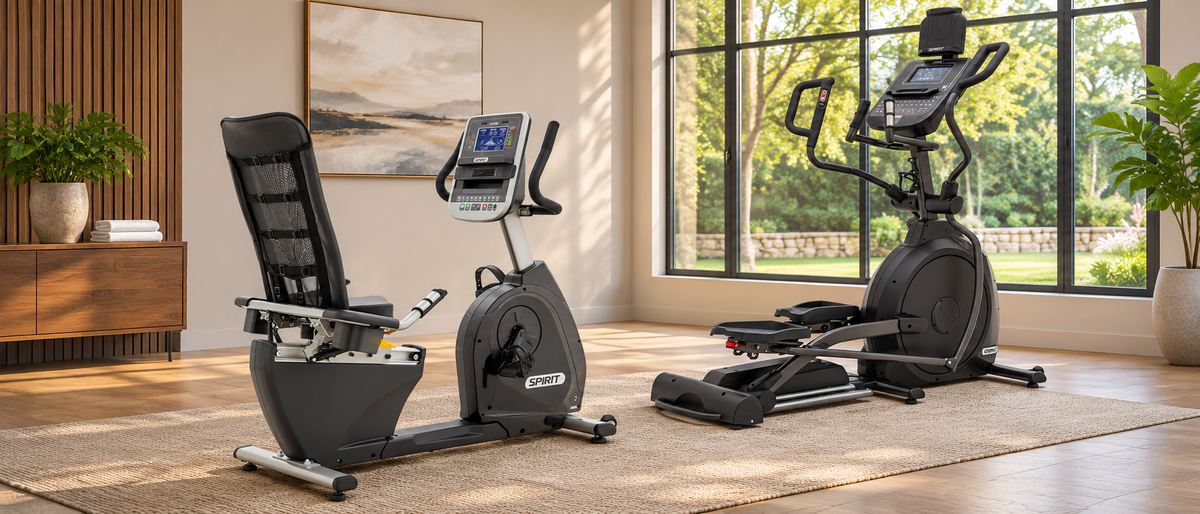
Elliptical vs. exercise bike: which should you choose?
Choose an elliptical if you prefer standing, gliding cardio and want to involve your arms with moving handles. Choose an exercise bike if you prefer seated pedaling: a spin bike for cycling-style rides and intervals, an upright bike for a more upright seated position, or a recumbent bike for a supported seat and backrest. Compare comfort, footprint, access, and workout habits before deciding.
Ellipticals and exercise bikes are both popular choices for low-impact home cardio, but they offer different movement patterns, training positions, and space requirements. The key distinction is that exercise bikes are not all the same: spin, upright, and recumbent bikes serve different workout preferences. The best choice depends on how you want to move, what feels comfortable, and how much room you have.
At The Fitness Outlet, we've helped customers find cardio equipment for homes and gyms for over 30 years. Below, we compare each category, from calorie-burning considerations and workout style to joint comfort, fit, space, and examples of current equipment.
Ellipticals vs. Exercise Bikes: The Main Differences
An elliptical supports you in a standing position while your feet travel through a smooth gliding path. Many ellipticals include moving handles so your arms can participate, although the feel of the stride and the available adjustments differ by model.
Exercise bikes keep you seated while pedaling. The type of bike matters: indoor cycling bikes use a cycling-oriented posture, upright bikes tend to promote a more upright seated position, and recumbent bikes provide a backrest with a different pedaling position. Those differences can matter more to comfort than a simple bike-versus-elliptical label.
Quick Comparison: Elliptical, Spin, Upright & Recumbent Bikes
| Factor | Elliptical | Spin bike | Upright bike | Recumbent bike |
|---|---|---|---|---|
| Position | Standing, generally upright | Seated; often leaned forward | Seated, usually more upright | Seated with back support |
| Movement | Gliding foot path, sometimes moving arms | Circular cycling motion | Circular pedaling | Forward pedaling from a reclined seat |
| Body emphasis | Legs plus upper-body participation with moving handles | Primarily legs and glutes | Primarily legs and glutes | Primarily legs and glutes |
| Space | Typically the largest footprint and ceiling clearance | Often compact | Often compact | Longer footprint than upright or spin bikes |
| Fit checks | Stride comfort, pedal spacing, handle reach | Saddle, handlebar reach, resistance | Seat height, leg extension, console reach | Seat position, back support, entry clearance |
| Workout style | Standing cardio, varying resistance | Cycling classes and cadence intervals | Steady seated cardio and programs | Back-supported seated cardio |
1. Posture, Movement, and Muscle Engagement
Elliptical: Standing, Gliding Movement
An elliptical lets you exercise standing up without the repeated foot strikes of running. Your legs do most of the work, while moving handles can bring your arms and upper body into the motion. Test stride feel, pedal spacing, and how your posture changes when you add resistance.
Spin Bike: Performance-Style Cycling
Spin bikes, also called indoor cycles, are geared toward cycling-style workouts and cadence-based intervals. Riders are seated and may lean forward toward the handlebars. Saddle fit and reach are particularly important: a bike can feel demanding if the position is wrong, even at light resistance.
Upright Bike: Seated Cardio in an Upright Position
An upright exercise bike typically supports a more vertical riding position than an indoor cycle. It can be an appealing choice for steady seated workouts, especially when you want straightforward resistance or preset workout options. Check that the seat and pedal reach suit your leg length.
Recumbent Bike: Back-Supported Seated Pedaling
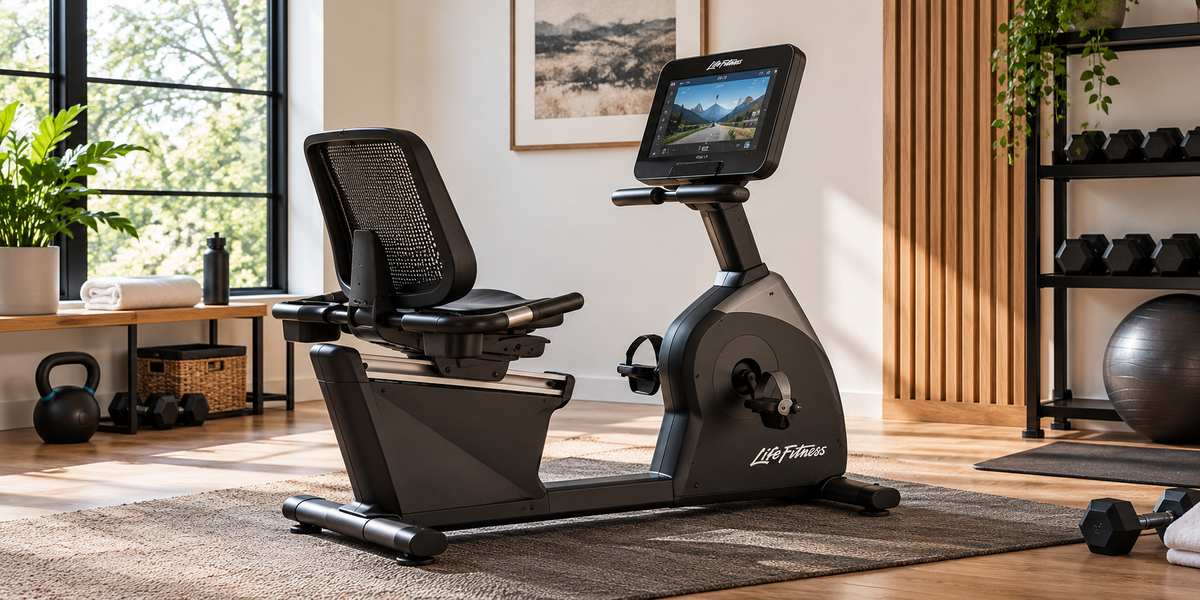
Recumbent bikes put the rider in a supported seat with a backrest and pedals farther in front of the body. This can be preferable for shoppers who want seated support rather than a cycling-class posture. Recumbent bikes also need adequate floor space and safe access around the seat.

2. Joint Comfort and Low-Impact Training
Both categories are generally low-impact because the feet remain connected to pedals instead of repeatedly striking the floor. However, “low-impact” does not mean pain-free for everyone. Ellipticals involve standing and weight-bearing movement; exercise bikes support the user through a seat. Knee and hip positions, saddle pressure, stride shape, and resistance all affect comfort.
For people comparing equipment after an injury or with ongoing pain, machine choice should reflect professional guidance and personal fit—not a blanket claim that one type is best for rehabilitation. Try the movement slowly before committing to a purchase.
3. Calorie Burn and Weight-Loss Goals
Both ellipticals and exercise bikes can support aerobic activity and weight-management routines. An elliptical may recruit additional upper-body muscles when you use the moving handles, while a cycling session can be very demanding when resistance or cadence rises. But neither type automatically burns more calories for every person. Duration, effort, conditioning, and consistency matter more than generic “calories per hour” estimates.
Choose the machine you can use regularly at an appropriate intensity, rather than assuming that an elliptical always beats a bike—or that a spin bike always beats an upright or recumbent model.
4. Space, Clearance, and Budget
For a small home gym, spin and upright bikes often occupy less floor space than a full-size elliptical. Recumbent bikes can be longer due to their seating and pedal layout. Ellipticals may require extra ceiling height because the user stands on moving pedals, and the handlebars need room to travel.
Measure the complete equipment footprint, access around the machine, and any manufacturer-recommended clearance. For ellipticals, consider user height plus pedal elevation. For bikes, leave space to get on and off and to adjust the saddle or seat. Prices overlap across categories, so compare the model's build, comfort, warranty, and features rather than assuming bikes are always less expensive.
5. Controls and Adjustments to Test Before Buying
- Elliptical: Test natural stride feel, pedal placement, handle reach, stability, and resistance transitions. Some models offer incline or stride adjustments; check the exact model.
- Spin bike: Check saddle height and front-to-back fit, handlebar reach, resistance changes, and whether your preferred cadence is easy to maintain.
- Upright bike: Check seat height, pedal reach, console visibility, and how comfortably you can maintain an upright posture.
- Recumbent bike: Check seat distance from the pedals, backrest support, entry clearance, and access to controls.
6. Match the Machine to Your Workout Preferences
Choose an elliptical if you prefer upright, stride-based workouts and would like arm participation with moving handles. Choose a spin bike if you enjoy cycling classes, intervals, and performance-style pedaling. Choose an upright bike for seated pedaling in a more vertical posture, or a recumbent bike if having a supportive backrest is a priority.
If multiple people will use the machine, test adjustments for each rider. The right machine is the one that fits the people using it—not necessarily the model with the longest feature list.
Four Fitness Outlet Models to Compare
These four currently active Shopify models represent the main equipment types. Product images below are taken from TFO's product catalog. Check each product page and current manufacturer documentation for model-specific details and warranty coverage.

LeMond Fitness RevMaster Pro
Compare if: You enjoy cycling classes, a performance-style riding position, and adjustable cycling resistance.

Spirit Fitness XBU55 Upright Bike
Compare if: You prefer seated pedaling in a more upright position and a compact cardio setup.

Spirit Fitness XBR25 Recumbent Bike
Compare if: You want back-supported seated cycling and a step-through-style layout to evaluate for comfort.

Spirit Fitness XE195 Elliptical Trainer
Compare if: You want upright, standing cardio and a gliding stride instead of a bike saddle.
Showroom Checklist: Make the Decision in 10 Minutes
- Try each machine type at an easy pace and note which movement feels most natural.
- Check seated fit and posture on each bike, or stride and handle reach on the elliptical.
- Increase resistance gradually; pay attention to stability and comfort rather than calorie estimates.
- Think about the workouts you would realistically repeat each week.
- Measure the equipment footprint plus entry, access, and ceiling clearance at home.
Bottom Line
If you are deciding between an elliptical and an exercise bike, start with the movement and posture you prefer. Ellipticals offer standing gliding cardio, while spin, upright, and recumbent bikes provide three distinct seated experiences. Comparing all four types makes the final purchase choice more useful than a simple “bike versus elliptical” verdict.

Share: