


What Is the Best Exercise Equipment for Bad Knees?
For many shoppers, a recumbent bike is a practical place to start because the seated position, adjustable fit, and smooth pedaling reduce weight-bearing impact. Ellipticals and seated ellipticals can also provide lower-impact cardio, while strength equipment should be chosen more carefully and used only within a range of motion that feels comfortable and is appropriate for your individual situation.
If knee discomfort makes running, stairs, or high-impact workouts difficult, choosing the right exercise machine can make home cardio and strength training easier to manage. The best equipment is usually adjustable, stable, and able to provide useful resistance without repeated impact.
This guide compares several common options for people searching for the best exercise equipment for bad knees, including recumbent bikes, ellipticals, seated ellipticals, and adjustable strength equipment. Because knee pain can have many causes, equipment choice should be based on your comfort, mobility, diagnosis, and any guidance you have received from a doctor or physical therapist.
| Equipment Type | Why Shoppers Compare It | What to Check |
|---|---|---|
| Recumbent Bike | Seated, supported cardio with no foot-strike impact | Seat position, pedal reach, step-through access |
| Elliptical | Standing cardio with feet staying on the pedals | Stride feel, pedal spacing, stability, resistance |
| Seated Elliptical | Supported position with upper- and lower-body movement | Entry height, seat adjustment, pedal path |
| Functional Trainer | Adjustable resistance for varied strength exercises | Range of motion, load, exercise selection, professional guidance |
What Makes Exercise Equipment More Knee-Friendly?
There is no single machine that is right for every knee condition. In general, shoppers with knee concerns often benefit from equipment that lets them control resistance, range of motion, and body position.
Useful features to compare include:
- Low-impact movement: your feet stay supported rather than repeatedly striking the floor.
- Adjustability: seat position, pedal position, stride, or resistance can be changed to fit your body.
- Stable support: handles, back support, or a guided movement path can make setup and movement feel more controlled.
- Gradual resistance: you can start light and increase difficulty over time instead of beginning with a heavy load.
Fit matters. A recumbent-bike seat that is too close, an elliptical stride that feels awkward, or strength equipment set to an uncomfortable range can all make a low-impact machine feel less comfortable.
Best Cardio Machines for Bad Knees
1. Recumbent Bikes
Recumbent bikes are one of the most practical cardio-machine categories to compare if you want a supported seated position. Your back is supported, the pedals are in front of you, and the resistance can be adjusted without the repeated landing forces of running or walking.
The most important setup detail is pedal reach. At the farthest point of the pedal stroke, your knee should generally remain slightly bent rather than locked or excessively flexed. If you are working through an injury or diagnosed knee condition, confirm your preferred range of motion with your clinician.


Spirit XBR55 Recumbent Bike
Best for: Shoppers who want adjustable seating, a reclining mesh back, step-through access, and 20 resistance levels.

Life Fitness RS1 Recumbent Bike
Best for: Shoppers who prioritize open step-through access, multiple seat positions, and a choice of console configurations.
2. Ellipticals
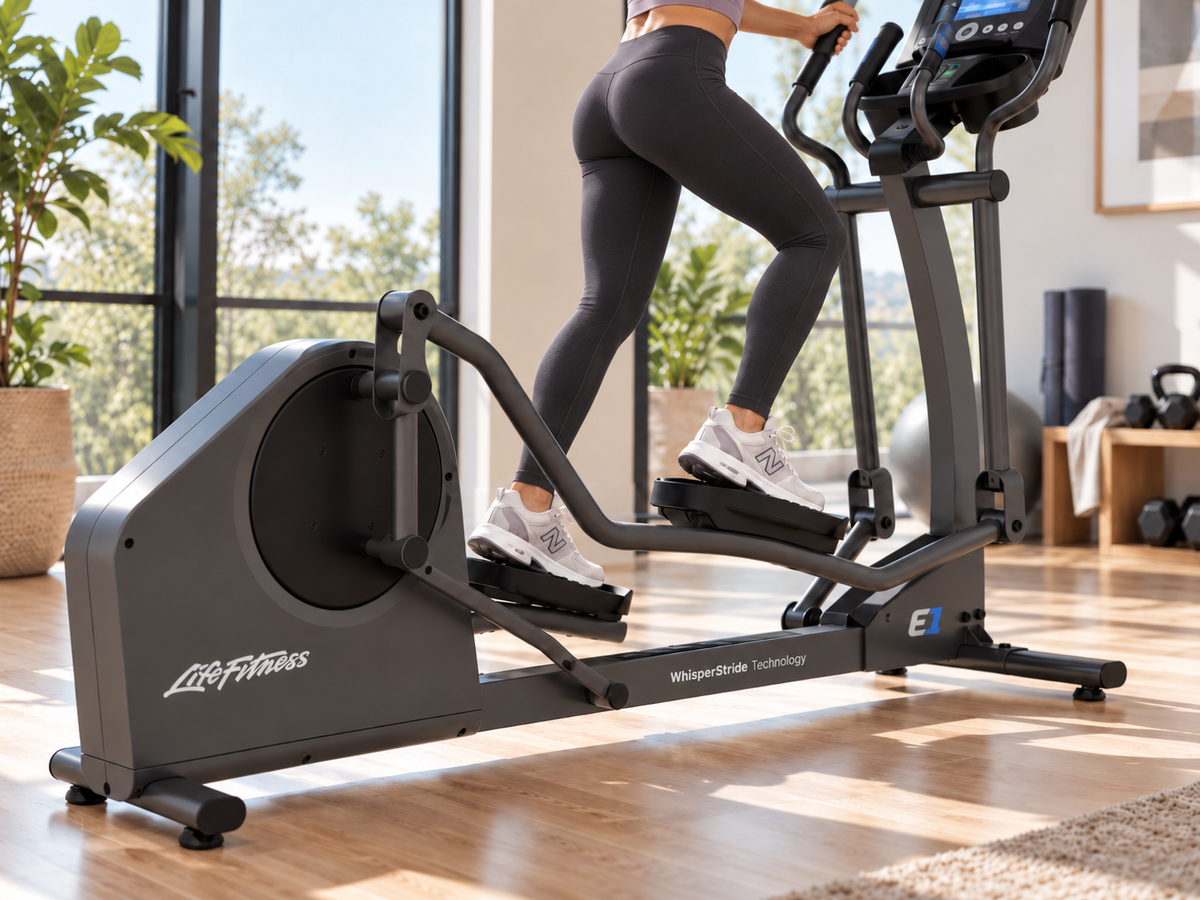
Ellipticals provide standing cardio while keeping your feet in contact with the pedals throughout the stride. That removes the repeated foot-strike impact associated with running, but the motion still requires you to bear your body weight.
If you are comparing an elliptical for knee comfort, pay attention to pedal spacing, stride feel, step-up height, resistance, and how easily you can mount the machine. A machine that feels natural to one person may not feel the same to someone with a different height, mobility level, or knee condition.

Spirit XE295 Elliptical
Best for: Home users who want a 20-inch stride, narrow pedal spacing, adjustable pedal positions, and straightforward residential cardio features.

TRUE Fitness M50 Elliptical
Best for: Shoppers who want a premium residential elliptical with multiple console options and a compact home-focused design.
3. Seated Ellipticals
A seated elliptical can be worth comparing if you want more support than a standing elliptical but still prefer a combined upper- and lower-body movement. These machines vary considerably in seat height, step-through access, pedal path, and upper-body handle design.

Octane Fitness XR6 Seated Elliptical
Best for: Shoppers who want a premium seated cardio machine with step-through access, multiple seat adjustments, and upper-body handlebars.

TRUE Fitness Gravity Recumbent Elliptical
Best for: Shoppers who want a premium recumbent elliptical with a supported seated position and multiple console configurations.
What About Strength Training for Bad Knees?
Strength training can be part of many knee-management or rehabilitation programs, but the appropriate exercises and loading depend heavily on the cause of your symptoms. A machine should not be described as universally “safe” for an injured or arthritic knee.
If you have been cleared for strength training, look for equipment that gives you a stable setup, controllable resistance, and a range of motion you can adjust. Start conservatively and follow any movement restrictions from your physician or physical therapist.

BodyCraft HFT Pro Functional Trainer
Best for: Home users who want adjustable cable resistance and the flexibility to choose exercises, resistance, and range of motion rather than relying on one fixed lower-body movement.

HOIST V4 Elite Home Gym
Best for: Shoppers who prefer a more traditional selectorized home-gym setup with guided exercise options and adjustable resistance for home strength training.
Exercise selection, loading, and range of motion should still match your ability and any guidance from a qualified healthcare professional.
How to Choose Exercise Equipment for Knee Pain
Rather than choosing based on a diagnosis label alone, use a practical checklist:
- Can you get on and off the machine comfortably?
- Can the seat, pedals, stride, or resistance be adjusted to fit you?
- Can you move through the exercise without sharp or worsening pain?
- Can you start at a very low resistance and progress gradually?
- Does the machine fit your room with enough space for safe entry and exit?
- Has your doctor or physical therapist given you any specific range-of-motion or loading restrictions?
Exercise Equipment for Seniors With Bad Knees
For older adults, accessibility can matter as much as the workout itself. Step-through recumbent bikes and seated ellipticals can make entry easier, while larger displays, stable handles, adjustable seating, and simple resistance controls can make everyday use more manageable.
If balance is a concern, a seated machine may be easier to use than a standing elliptical. If you are comparing equipment after surgery or for a diagnosed condition, bring your clinician's recommendations into the buying decision.
What Should You Avoid?
There is no universal list of exercises that everyone with knee pain must avoid. What aggravates one condition may be appropriate for another. Instead of automatically eliminating specific machines, pay attention to symptoms, technique, resistance, and range of motion.
Stop or modify an exercise if it causes sharp pain, increasing swelling, instability, or symptoms that continue to worsen after the workout. Seek medical guidance if symptoms are new, severe, or persistent.
Best Exercise Equipment for Bad Knees: Bottom Line
If your main goal is lower-impact cardio, a recumbent bike is often the easiest category to compare first because it combines a supported seat with adjustable resistance. Standing ellipticals can work well for people who are comfortable bearing weight, while seated ellipticals offer another supported option.
For strength training, the right equipment depends more on your diagnosis, movement tolerance, and professional guidance than on the machine name alone. Whatever you choose, prioritize adjustability, comfortable setup, and gradual progression.
This article is for general educational purposes and is not a substitute for medical advice. If you have knee pain, a recent injury, or have had surgery, consult a qualified healthcare professional before beginning or changing an exercise program.

Share:
Best High-Performance Treadmill for Runners
Infrared Vs. Traditional Sauna for Home