

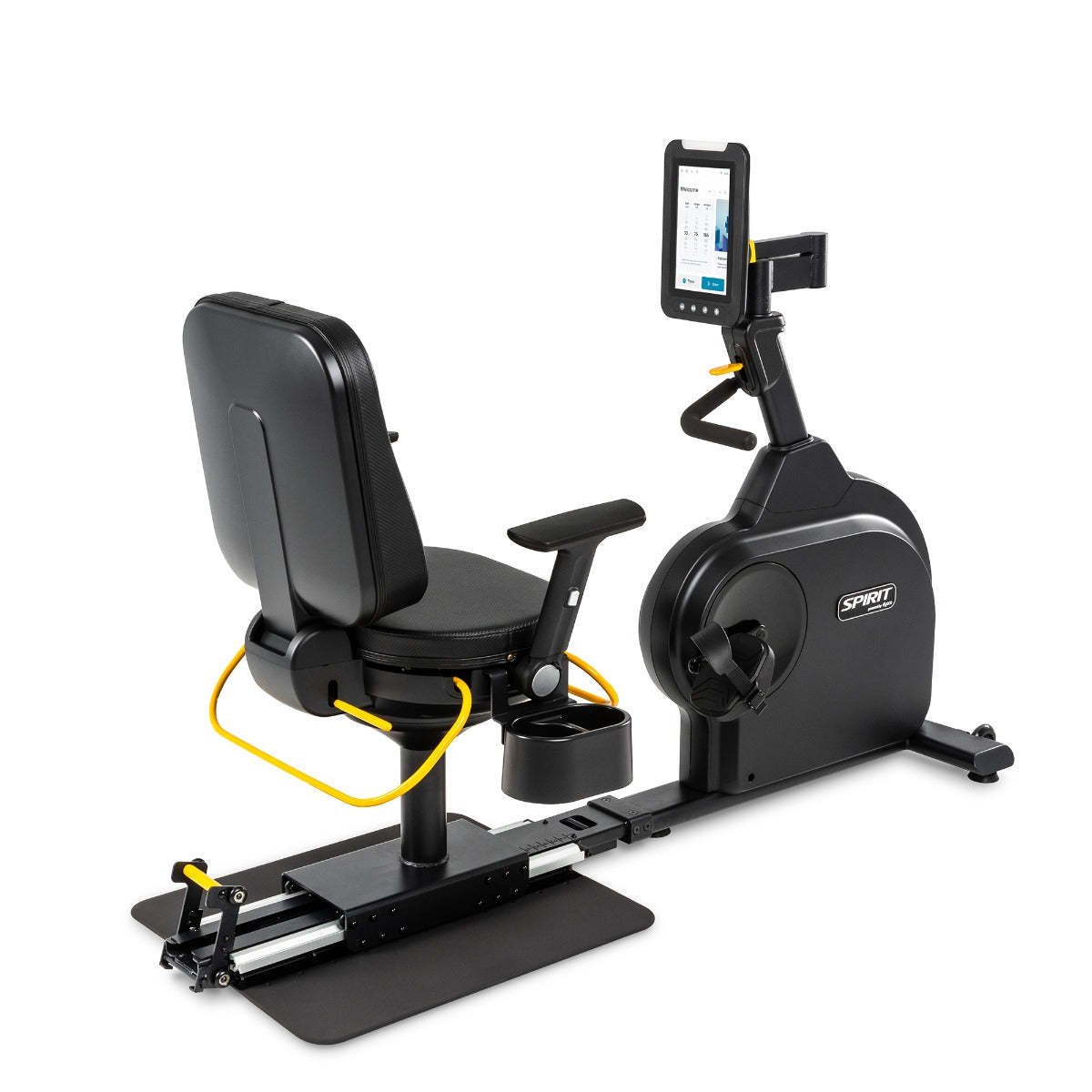
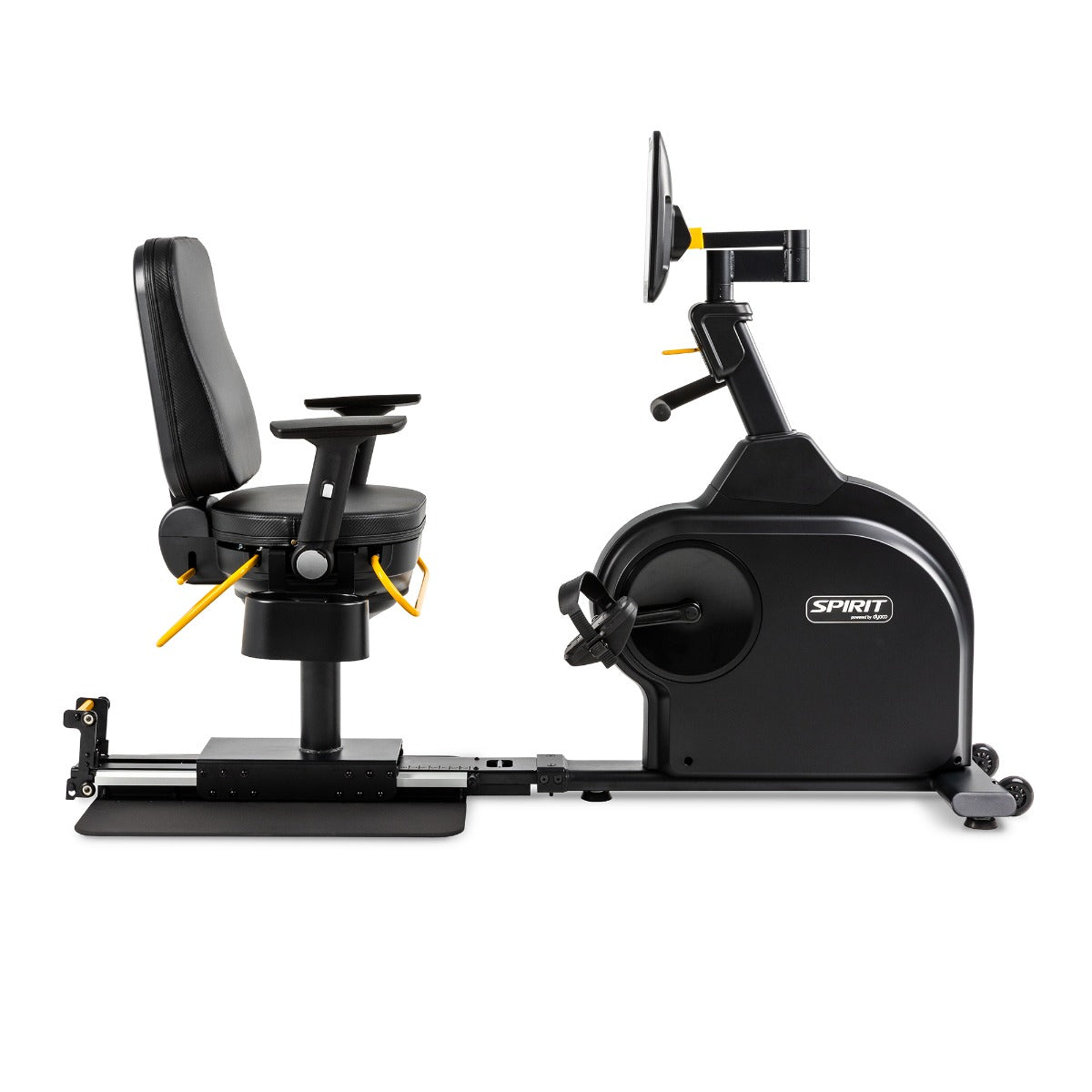
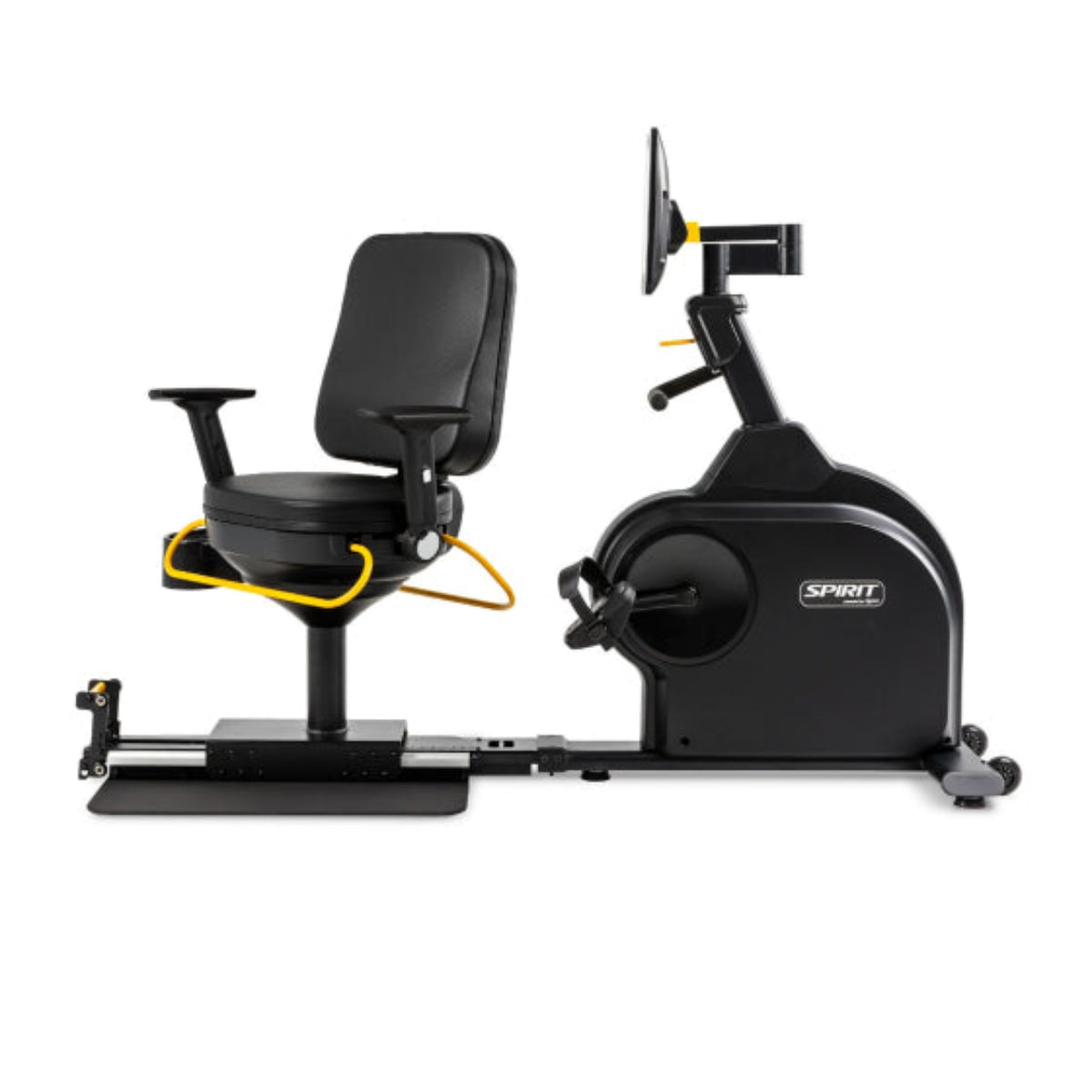


Spirit Fitness Rehab 8.5R Recumbent Bike
Sku: 785145
Pairs well with
If you have any questions, you are always welcome to contact us. We'll get back to you as soon as possible, within 24 hours on weekdays.
-
Customer Support
Have a question about this product? Not sure which equipment is right for you? Our fitness experts are just a call or click away.
📞 Call us at: 866-883-4863
📧 Email us at: sales@thefitnessoutlet.comWe’re happy to assist with product details, delivery options, custom quotes, or anything else you need. Let us help you find the perfect fit for your fitness goals!
Description
Advanced Rehabilitation Requires More Than a Standard Recumbent Bike
Traditional exercise bikes can create unnecessary barriers for patients who need precise resistance control, easier transfers, measurable progress, and a more supportive riding position. The Spirit Fitness Rehab 8.5R Recumbent Bike is purpose-built for rehabilitation environments, combining accessible entry, bidirectional resistance, advanced clinical programs, and a comfortable recumbent position in one professional-grade rehabilitation exercise bike.

Accessible Design Built Around the Patient
When mobility is limited, simply getting onto a piece of exercise equipment can become part of the challenge. The Spirit Rehab 8.5R addresses that problem with a fully adjustable seat that swivels for easier entry and exit and can be removed to provide direct wheelchair access. The high-density foam seating also offers fore, aft, and recline angle adjustments, allowing therapists to establish a more appropriate position for a wide range of users.
The 8.5R supports users from approximately 4'10" to 6'6" and accommodates up to 440 pounds. Oversized fast-latching pedals, an assistive hand grip, and a comfort stop brake lever further support controlled transitions and confident use.

100 Resistance Levels With Clinical Feedback
Effective rehabilitation is rarely a one-size-fits-all process. The Spirit Fitness Rehab 8.5R provides 100 levels of bidirectional magnetic resistance, allowing patients to pedal both forward and backward while therapists progressively adjust workload. Its magnetic resistance system is engineered for a low startup threshold and smooth, precise changes in resistance.
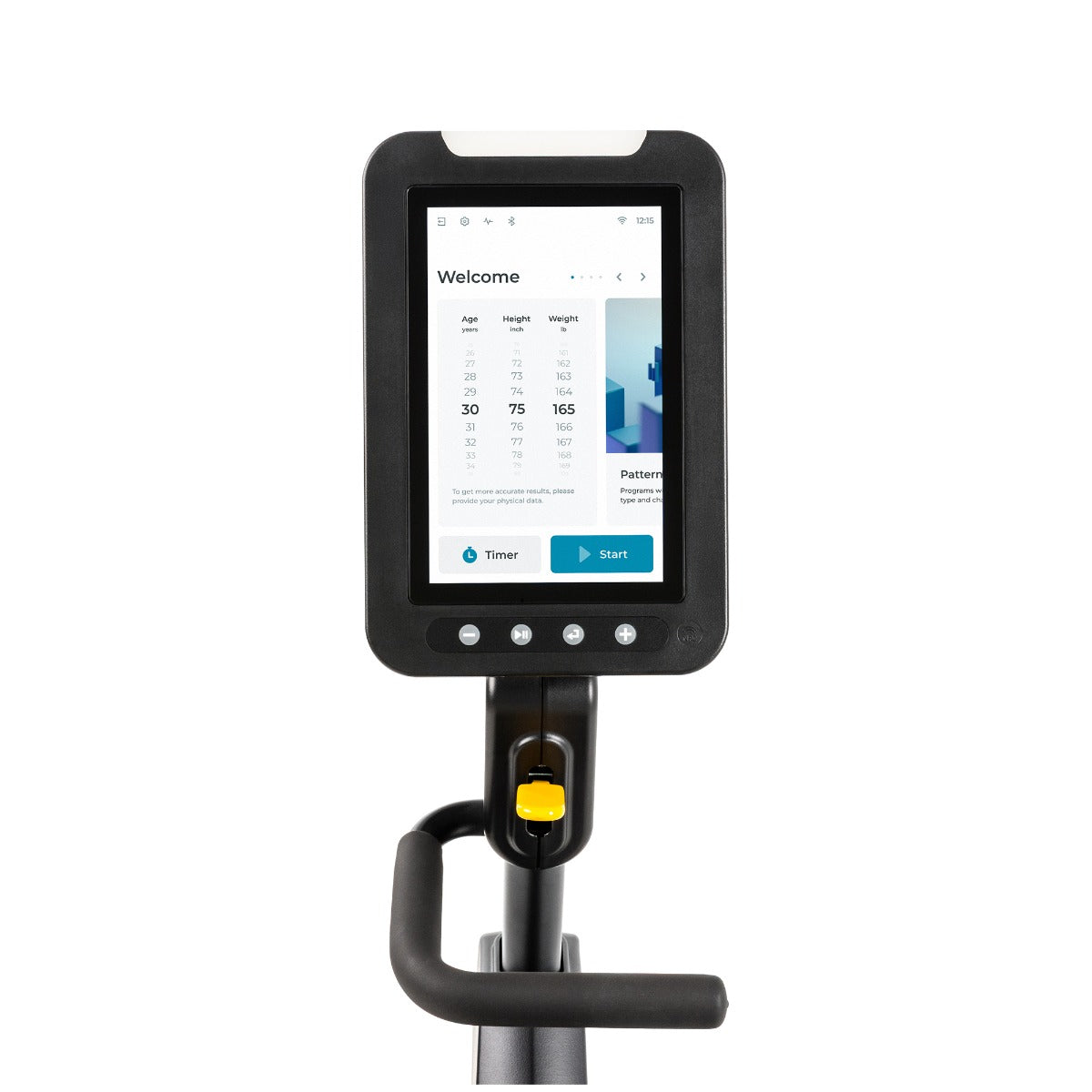
The 10.1-inch touchscreen goes beyond basic workout statistics. Programs include Power Distribution, Wingate Test, heart rate targets, METs targets, YMCA testing, HIIT, Facility, Manual, Hill, Plateau, and additional assessment protocols. Spirit's Power Distribution feature provides a visual representation of output during each pedal rotation, while symmetry-focused feedback can help clinicians evaluate differences between the left and right legs.

Why Choose the 8.5R Over a Cheaper Recumbent Bike?
Lower-cost recumbent exercise bikes may work well for straightforward cardiovascular exercise, but rehabilitation facilities often need significantly more control and accessibility. A basic bike may offer resistance adjustment and heart rate readings, yet typically lacks direct wheelchair access, specialized assessment programs, extensive positioning adjustments, and the resistance precision expected in professional therapy settings.
The Spirit Fitness 8.5R is built around those higher demands. Its commercial-grade steel frame, forward and reverse pedaling, wireless heart rate capability, Bluetooth and ANT+ connectivity, USB data transfer, and cardiac stress test connection give therapists a much broader platform for individualized patient exercise. Its professional rehabilitation design makes it especially appropriate for physical therapy clinics, rehabilitation centers, hospitals, senior wellness facilities, and other environments where reliable repeat use is essential.
Spirit Fitness has developed a dedicated Rehab equipment line rather than simply repurposing residential cardio machines, making the 8.5R part of a broader professional rehabilitation platform focused on mobility, accessibility, and measurable exercise progression.
Includes free delivery. The Fitness Outlet is an authorized Spirit Fitness dealer, ensuring full manufacturer warranty support on every purchase.
Specifications
Specifications data
Warranty
Warranty data
Compare
| Feature | Spirit Fitness Rehab 4.0R Recumbent Bike | Spirit Fitness Rehab 7.0R Recumbent Bike | Spirit Fitness Rehab 8.5R Recumbent Bike |
|---|---|---|---|
| Best For | Physical therapy clinics, rehabilitation, senior fitness, and low-impact cardio | Advanced rehab facilities, sports recovery, and performance therapy | Premium rehabilitation, medical wellness centers, and intensive therapy environments |
| Resistance Levels | 20 Levels | 20 Levels | 20 Levels |
| Resistance System | ECB magnetic resistance | ECB magnetic resistance | Premium ECB magnetic resistance |
| Seat Design | Oversized adjustable comfort seat with lumbar support | Enhanced adjustable comfort seat with lumbar support | Premium rehab comfort seat with upgraded cushioning and adjustability |
| Accessibility | Step-through frame for easy entry and exit | Step-through rehab-friendly frame design | Enhanced accessibility with premium rehab frame design |
| Console Display | Bright white multi-window LED display | Advanced multi-window LED display | Premium rehab LED console with expanded workout feedback |
| Workout Programs | Standard rehab and cardio workout programs | Expanded rehab and cardio workout programs | Advanced rehab-focused workout programs |
| Heart Rate Monitoring | Contact and wireless heart rate monitoring | Contact and wireless heart rate monitoring | Contact and wireless heart rate monitoring |
| Bluetooth Connectivity | Yes | Yes | Yes |
| Maximum User Weight | 450 lbs | 450 lbs | 500 lbs |
| Pedal Design | Self-balancing pedals with adjustable straps | Self-balancing pedals with adjustable straps | Oversized self-balancing rehab pedals with adjustable straps |
| Machine Weight | Approx. 170 lbs | Approx. 195 lbs | Approx. 225 lbs |
| Commercial Warranty | Lifetime frame / 10 years brake / 5 years parts / 2 years labor | Lifetime frame / 10 years brake / 5 years parts / 2 years labor | Lifetime frame / 10 years brake / 5 years parts / 2 years labor |
| Key Advantage | Excellent entry-level rehab recumbent bike with easy accessibility | Balances rehab comfort with enhanced performance features | Most advanced rehab recumbent bike with premium comfort and higher capacity |
